Accessible Transport in Amsterdam Navigating the Trams and the Cobblestones
A practical guide to Amsterdam's accessible transport, from the tram lines with level boarding to avoiding the steepest canal bridges.
You Are at the Tram Stop on Nieuwezijds Voorburgwal and the Number 2 Pulls Up
The doors open. The tram floor is exactly level with the stop. You roll straight on. No ramp, no call button, no delay. That is the norm on every Amsterdam tram line as of 2023, because GVB retired its last high-floor stock in 2021 and now runs a fully low-floor fleet. The clear door opening is 850 mm on the Combino and Urbos trams, enough for a standard manual or power chair. Each vehicle has one wheelchair space measuring 1300 mm by 750 mm. Boarding from a raised stop requires no action on your part. At a street-level stop the driver deploys a ramp with a maximum gradient of 1:8, but you must request it. Wait beside the front door and make eye contact. The driver will see you.
Which Tram Lines Give You Level Boarding and Which Give You Trouble
Lines With Full Platform Coverage
Level boarding from a raised stop is standard on lines that call at stops with heights matching the tram floor. Line 26 to IJburg was designed for this from day one. Its stops all have raised platforms and the tram floor sits flush. Line 19 (Diemen South to Westergasfabriek) and line 24 (De Boelelaan VU to Central Station) also have full coverage.
Mixed Lines Inside the Canal Ring
Lines 1, 2, 5, 7, 12, 13, 14, and 17 mix raised stops and older street-level stops. At an older stop the gap between the low floor and the street gutter is wide. The driver will deploy the ramp, but the process adds 30 to 60 seconds to your trip. Factor that into connections.
The metro is the faster option if your destination lies outside the canal belt. All five metro lines (M50, M51, M52, M53, M54) are fully step-free with lifts at every station and a platform-to-train gap of 50 mm or less. But the metro does not enter the city centre. No metro station sits inside the Singelgracht boundary. For the Jordaan, the Negen Straatjes, or the Museumplein you stay on the trams.


The GVB App Filter and What it Shows You
Open the GVB app and tap the stop planner. There is an accessibility filter labelled "step free". Toggle it on. The app then shows only stops with raised platforms and lifts. That is reliable for metro stations and main tram stops outside the city centre. Inside the canal ring the filter will exclude stops where you could still board via the driver ramp. Learn which stops on your line have raised platforms and which do not. The GVB publishes a PDF list of stop platform heights by line on its website. Download that PDF before you arrive. The in-app filter is conservative and may skip a usable stop.
| Line | Route | Platform Type Inside Singelgracht | Ramp Required? |
|---|---|---|---|
| 26 | Central Station to IJburg | All raised | No |
| 19 | Diemen S to Westergasfabriek | All raised | No |
| 24 | De Boelelaan VU to Central Station | All raised | No |
| 1 | Central Station to Osdorp | Mixed | Yes at some stops |
| 2 | Central Station to Nieuw Sloten | Mixed | Yes at some stops |
| 5 | Central Station to Amstelveen | Mixed | Yes at some stops |
| 7 | Central Station to Slotermeer | Mixed | Yes at some stops |
| 12 | Central Station to Amstelveen | Mixed | Yes at some stops |
| 13 | Central Station to Geuzenveld | Mixed | Yes at some stops |
| 14 | Central Station to Flevopark | Mixed | Yes at some stops |
| 17 | Central Station to Osdorp | Mixed | Yes at some stops |
Canal Bridges Gradients and Routes That Reduce the Climb
The Steepest Bridges to Avoid
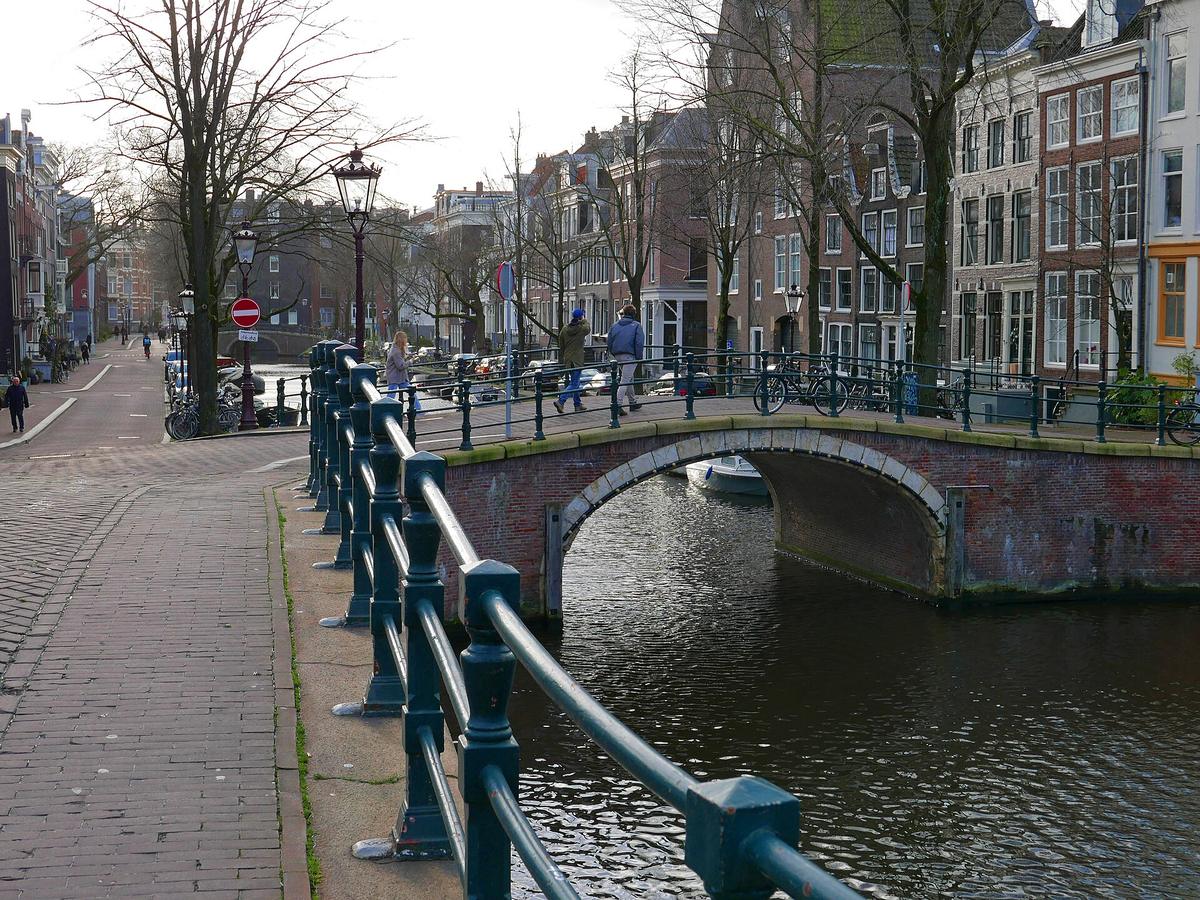
There are 128 canal bridges inside the Singelgracht boundary. The gradient on the older ones runs from 8 to 12 percent, and some exceed 14 percent. Pushing a manual chair up a 14 percent gradient is exhausting. A power chair climbing that grade drains battery fast. Avoid the bridges on Herengracht, Keizersgracht, and Prinsengracht near the Leidseplein and the Nine Streets. Those have the steepest rises.
The Gentlest Crossing in the City Centre
One corridor keeps the gradient to 6 percent or less. Take Utrechtsestraat south from the Frederiksplein intersection toward the Amstelveld. Cross Reguliersgracht at the Amstelveld. The bridge there is the gentlest in the city centre according to the Wheelmap user survey from 2023. Use that crossing for east-west travel near the Amstel. For north-south movement the tram route on Vijzelstraat is flatter than the parallel routes on Leidsestraat or Rokin because Vijzelstraat has fewer bridge crests.
Tram Tracks and Small Castors
Avoid the stretch of Leidsestraat between Leidseplein and Keizersgracht. The gradient on that bridge pair reaches 12 percent and the cobblestones are deep enough to catch small castors. The 35 to 45 mm flangeway gap in the tram tracks is the greater risk. If your wheelchair castor wheels are under 50 mm in diameter they can drop into the gap and jam. Cross tram tracks at a 70 to 90 degree angle. Do not roll parallel to the rail. For a contrast in accessible street design, Berlin’s cobblestone streets present a different kind of challenge that catches wheels in their own way.
Cobblestones How to Plan Around the Klinkers
Where to Find Smooth Surfaces
Most city-centre streets are paved with klinkers, the brick and cobble surface that rattles a chair and strains your shoulders. The tram routes embed their tracks in these surfaces, so you cannot avoid cobbles entirely by staying on tram lines. The smoothest surfaces are the main thoroughfares where the city has replaced the setts with asphalt or pressed concrete. Damrak from Central Station to the Dam is asphalt. Rokin from the Dam to Munttoren is pressed concrete. The Museumplein approaches on Paulus Potterstraat and Van Baerlestraat are fine aggregate asphalt. Use those for your long east-west and north-south crossings.
The Worst Cobbles and Their Alternatives
The worst cobbles in the city centre are on the minor streets in the Jordaan and the Spuistraat area. Spuistraat between Spui and Raadhuisstraat uses large rounded setts that force a chair to pitch side to side. Take Nieuwezijds Voorburgwal as an alternative. It runs parallel and is paved with a smoother brick pattern. For the Jordaan use the Prinsengracht quayside. The east side between Lijnbaansgracht and Elandsgracht has asphalt. The west side is still cobbled.

When the Trams Are Not the Answer Taxis Ferries and Canal Boats
Accessible Taxis After Hours
Between midnight and 06:00 the trams stop running. The night bus network is not consistently accessible. Your backup is a wheelchair-accessible taxi. TCA (Taxi Centrale Amsterdam) operates a fleet of rear-entry ramp vehicles. Call +31 20 777 7777. The ramp width is 800 mm minimum. Staxi is the alternative; book via the Staxi app or call +31 88 100 4444. Both services charge metered rates with a starting fare around €3.50 and a per-kilometre rate near €2.35. A trip from the city centre to the Zuidas costs roughly €15 to €20. Between 01:00 and 05:00 TCA charges a night surcharge of about €4.
Free Ferries to Amsterdam Noord
The IJ ferries to Amsterdam Noord are free and step-free. All GVB ferries deploy a ramp at each docking. The maximum ramp gradient at low tide is 1:10. The horizontal gap between the pontoon and the ferry deck at the Centraal Station pontoons reaches 100 mm. That is manageable for a power chair but a manual chair may need a helper to push the front castors across the gap. Take the Buiksloterweg ferry for the shortest crossing.
Booking a Canal Tour
For a canal tour you need a boat with a ramp. Rederij Plas boards at Damrak pier 5. The ramp width is 750 mm, which is tight for a large power chair. Book ahead. Blue Boat Company boards at Stadhouderskade 30. Their ramp gradient is 1:6, steeper than the recommended 1:8. A manual chair self-propelling up that ramp is difficult. Ask for a push from the crew. Both require advance notice.
What to Do on Arrival at Amsterdam Centraal Station
Lifts, Toilets, and the Tram Tunnel
Go directly to the lift banks on the east and west ends of the main hall. Platforms 1 and 2 have lift dimensions of 1100 mm by 1400 mm, enough for a power chair and a companion. The paid accessible toilet on platform 2 costs €0.70 and does not require a RADAR key. From the station concourse follow the blue tram signs to the tram tunnel, which has level access. Do not take the pedestrian bridge over the IJ side. It has steps. Use the ramp at the back of the station on the water side.
Stations to Use and Stations to Skip
Avoid Amsterdam Muiderpoort station entirely. It has no lift and no step-free access. All other major stations in Amsterdam (Zuid, Amstel, RAI, Lelylaan, Holendrecht, Science Park) have step-free access via lifts with doors 900 mm wide minimum. The Schiphol Airport assistance service is Axxicom Airport Caddy. Book 48 hours in advance through your airline or the Schiphol website. The hidden disability lanyard is available free at information desks with no proof required.
Common Questions
Which Amsterdam tram lines have raised platform level boarding at every stop inside the Centrum?
None. Lines 19, 24, and 26 have raised platforms at every stop, but they serve outer districts and IJburg. Inside the canal ring every line uses a mix of raised platforms and older stops. Lines 1, 2, 5, 7, 12, 13, 14, and 17 all require the driver ramp at some stops.
How do I identify a raised platform stop from the street?
Look for a grey concrete curb 200 mm high with a yellow tactile strip along the edge. The tram floor is exactly level with that curb. A stop without that curb is a street-level stop where you must request the ramp from the driver.
Can I cross a canal bridge in the Centrum without climbing a steep slope?
Use the Reguliersgracht bridge at the Amstelveld. Its gradient is 6 percent, compared to the 12 to 14 percent on most bridges in the city centre. The corridor via Utrechtsestraat and Amstelveld keeps you below 6 percent for an east-west crossing.
What do I do if a tram stop has no platform and no driver sees me?
Wave at the driver and point to the front door. If the driver stops but does not deploy the ramp, call the GVB customer service line. Wait for the next tram, which arrives every 6 to 10 minutes on lines 1, 2, 5, 7, 12, 13, 14, and 17.
Read next
-
 Accessible Hotels in Amsterdam Narrow Houses and the Lift Problem
Why Amsterdam's narrow canal houses create a unique lift problem for wheelchair users and where to find hotels with genuine access.
Accessible Hotels in Amsterdam Narrow Houses and the Lift Problem
Why Amsterdam's narrow canal houses create a unique lift problem for wheelchair users and where to find hotels with genuine access.
-
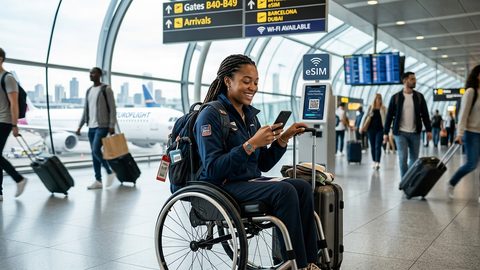 Mobile Data Planning for Wheelchair Users Traveling Abroad With eSIM
Plan mobile data for wheelchair travel abroad, with eSIM setup checks, lift outage updates, transport contacts, repair planning, and offline backups.
Mobile Data Planning for Wheelchair Users Traveling Abroad With eSIM
Plan mobile data for wheelchair travel abroad, with eSIM setup checks, lift outage updates, transport contacts, repair planning, and offline backups.