Disabled Travel in Barcelona, the Accessible City Spain Built for 1992
Barcelona rebuilt itself for the 1992 Paralympics and became a benchmark. What still works, what deteriorated, and where the Gothic Quarter cobbles catch you.
- Flag
-

- ISO code
- ES
- Population
- 1,686,208
- Currency
- EUR
- Timezone
- Europe/Madrid
The 1992 Paralympic Lie Most Travellers Still Believe
Most guides tell you Barcelona is a disabled travel paradise because of the 1992 Paralympics. That is half true and half dangerous. The 1992 Games did force a city built on medieval bones to drop kerbs, widen pavements, and retrofit a metro system that had never considered a wheelchair user. No Spanish city had attempted anything on that scale. But the story is not a straight line of progress. Some of that 1992 infrastructure has aged badly. The beach programme that came later is a genuine strength. And the Gothic Quarter remains what it always was: a cobbled obstacle course that no Paralympic deadline could fix. Treat Barcelona as two different cities: the 19th-century Eixample grid where the theory mostly works, and the old town where it falls apart. Here is how to navigate both.
What the 1992 Games Actually Built and What it Became
The 1992 Paralympics forced Barcelona to spend on things no Spanish city had spent on: dropped kerbs at every major intersection, widened pavements on the main thoroughfares, and a metro system that began adding lifts. The urban grid of the Eixample, designed by Ildefons Cerdà in the 1860s with wide streets and chamfered corners, made the work easier. Roll down Carrer de Balmes, Passeig de Gràcia, or Via Laietana without a fight. The modernista buildings on those boulevards, including the works of Antoni Gaudí, sit on flat pavements with accessible entrances at the main portals.
The Metro Today: 93 Percent, But Read the Fine Print
Barcelona Metro reports 93 percent of its stations have lift coverage. That number covers street to platform. It does not mean street to train. A lift gets you down. Getting onto the train depends on the platform gap and the age of the line. The newest lines, L9 and L10, have level boarding. Everything else requires a gap of several inches that a manual wheelchair cannot clear without a ramp. Staff can deploy a boarding ramp but you must ask. Arrive at the ticket office 15 minutes before you intend to board. Ask two questions: "Is the lift from street to platform in service today?" and "What is the platform to train step height at this station?" The 2024 data from TMB, Barcelona's transport authority, confirms that 163 of 175 stations have a lift. The 12 without are mostly on L2 and L3 in the older central stretch. Avoid the Sagrada Família station on L2 and L5 if you are in a wheelchair. The lift there is a single narrow car that queues badly. Use the L5 station at Hospital de Sant Pau instead and enter the basilica from the Passion Façade side, which has a ramp.
The Metro That Never Got Finished
The most honest number is 93 stations with step free street to platform access. That is barely half the network. The other stations with lifts serve only one or two lines, not all the platforms. Barcelona never completed the full retrofit. The 1992 Paralympic deadline built what it could, then stopped. The bus fleet is a different story. Every city bus is low floor with a boarding ramp. All routes are served by low floor vehicles. There is at least one designated wheelchair space per bus. If the metro lift is broken on any given day, and they break, the bus is your backup. Bus frequency on the main routes runs every 5 to 8 minutes on weekdays. Use route V17 on the Diagonal or H16 on the coast road for the most reliable wheelchair access.


Beach Access: the One Thing Barcelona Got Right After 1992
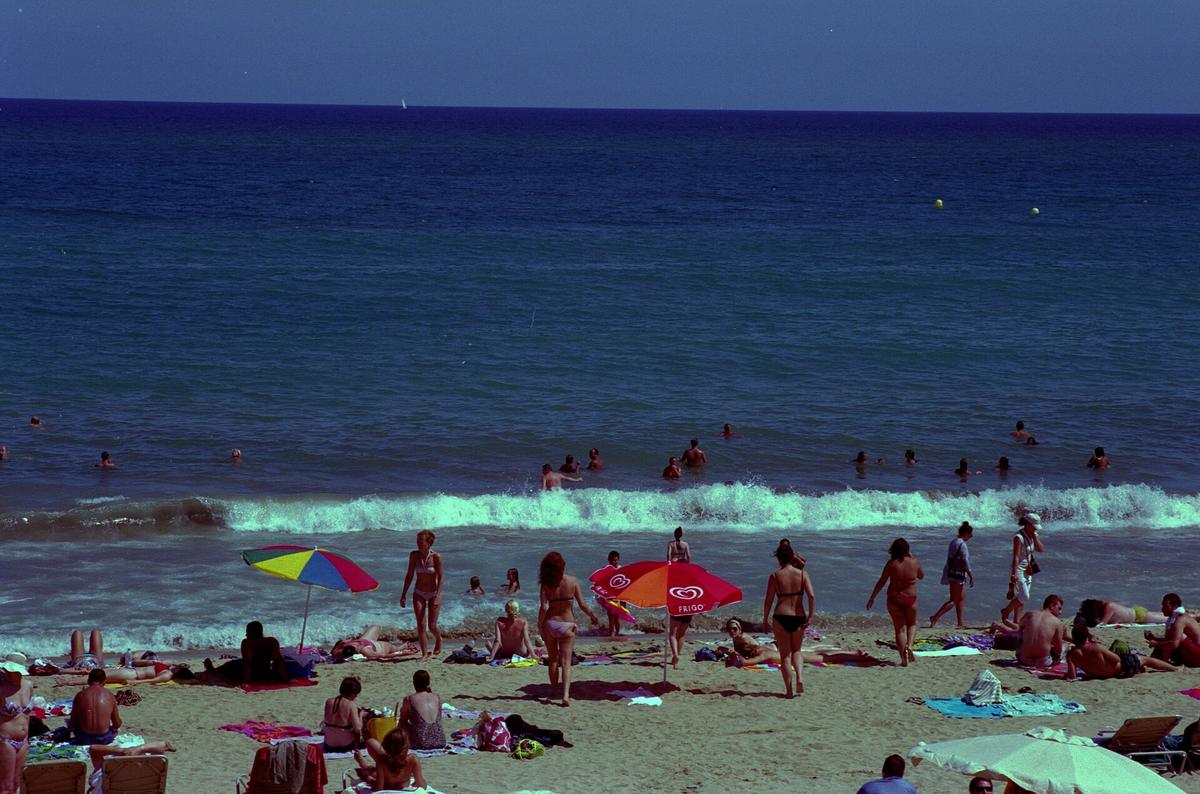
The Paralympic legacy did not cover the coast. The beach programme came after, driven by a separate city initiative in the early 2000s. It is now Barcelona's strongest accessible asset. Four of the city's beaches, Barceloneta, Bogatell, Nova Icària, and Sant Sebastià, run a free amphibious chair programme. The chairs have oversized wheels that roll on sand and float in the water. Book at the beachside kiosks. No reservation required, first come first served. The season runs from June 1 to September 30. Outside that window the chairs are stored. Boardwalks are concrete all the way from Barceloneta to Diagonal Mar. Every beach ramp is graded at 8 percent or less. The changing rooms at Bogatell and Nova Icària include hoists. Barceloneta has the most chairs but the most crowds. Go to Nova Icària on a Tuesday morning if you want space.
The Gothic Quarter is Not Accessible. Stop Pretending it Is.
The Gothic Quarter has cobbled streets laid in the 14th century. The 1992 Games did not touch them. They are uneven. The gaps between stones catch front casters. The pavements are narrow, sometimes 60 centimetres wide, and shared with restaurant tables, delivery scooters, and dog walkers. Do not take a manual wheelchair into the area around the Cathedral or the Roman walls unless you have a strong pusher and a chair with 8-inch or larger front casters. A power chair with 12-inch casters can manage Plaça del Rei and Carrer del Bisbe but expect vibration.
Where to Stay and How to See Gaudí
The Eixample grid was designed for carriages and works for wheels. Stay on the grid side of Plaça de Catalunya. Every hotel on the Eixample side of the square was required by 2004 building codes to have a step free entrance. The Gothic Quarter side has no such requirement. Every major Gaudí site, Casa Batlló, Casa Milà, Sagrada Família, Park Güell, is in the Eixample or on its edge. All have step free entrances and accessible toilets. Park Güell's monumental zone requires a hill climb on a 10 percent gradient. Book the minibus entrance and have the driver drop you at the upper gate. That saves the climb.
.jpg)
Common Questions
Which metro stations in Barcelona have no lift at all?
Twelve stations, all on L2 and L3 in the old centre. The complete list changes annually. Check TMB's current accessible network map before any trip. The most notorious are Jaume I on L4 and Drassanes on L3. Avoid both.
Can I use my own power chair on Barceloneta beach?
Not on the sand. The loose dry sand stops standard power chairs. Use the beach's amphibious chair from the kiosk, which has balloon tyres. Your own chair works only on the concrete boardwalk. Leave it chained to the designated bike rack at the beach entrance.
Is the Sagrada Família accessible for a wheelchair user?
Yes, but use the Passion Façade entrance on Carrer de la Marina. That entrance has a ramp. The Nativity Façade entrance has three steps. Book the accessible ticket online, not at the gate. The lift inside goes to the tower but holds only one wheelchair at a time.
How do I book a wheelchair accessible taxi in Barcelona?
Use the Free Now app and select the Accessible filter. Black taxis with ramps are marked with a blue wheelchair symbol on the door. Do not flag a standard taxi on the street. Wait times for accessible taxis range from 12 to 25 minutes in the Eixample, longer at 3am.
Read next
-
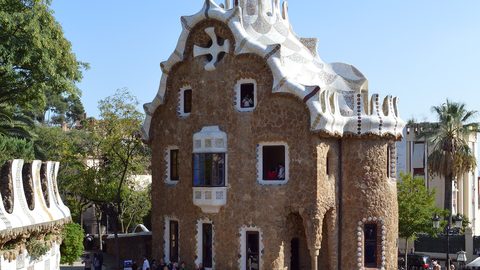 Accessible Hotels in Barcelona The 1992 Legacy and What to Verify
How Barcelona's 1992 Paralympic legacy shaped hotel accessibility and the exact measurements to verify before booking an adapted room.
Accessible Hotels in Barcelona The 1992 Legacy and What to Verify
How Barcelona's 1992 Paralympic legacy shaped hotel accessibility and the exact measurements to verify before booking an adapted room.
-
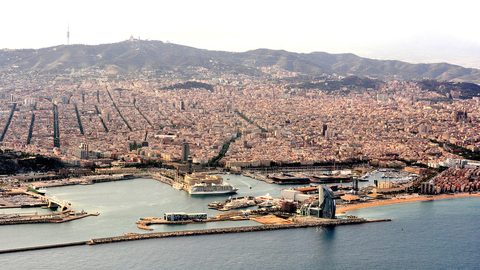 Getting Around Barcelona for Disabled Travellers Metro Lifts and the Cobbles
A realistic guide to Barcelona's accessible transport, from frequently broken Metro lifts to the cobbled streets of the Gothic Quarter.
Getting Around Barcelona for Disabled Travellers Metro Lifts and the Cobbles
A realistic guide to Barcelona's accessible transport, from frequently broken Metro lifts to the cobbled streets of the Gothic Quarter.
-
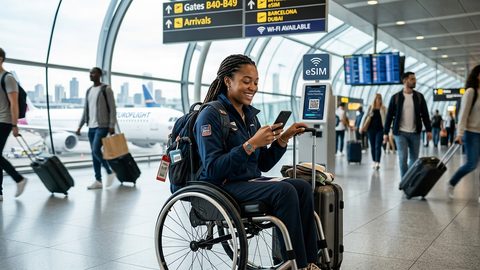 Mobile Data Planning for Wheelchair Users Traveling Abroad With eSIM
Plan mobile data for wheelchair travel abroad, with eSIM setup checks, lift outage updates, transport contacts, repair planning, and offline backups.
Mobile Data Planning for Wheelchair Users Traveling Abroad With eSIM
Plan mobile data for wheelchair travel abroad, with eSIM setup checks, lift outage updates, transport contacts, repair planning, and offline backups.