Low Sensory Travel Planning for Airports Museums and City Days
A practical guide to Low Sensory Travel Planning for Airports Museums and City Days.

What low sensory travel planning actually means
Low sensory travel planning is about reducing the unpredictable noise, light, crowding and processing demands that can make a journey exhausting or inaccessible. It is not a single checklist. It is a way of sequencing decisions so that a traveller knows what to expect before they arrive, has tools to adjust their environment during the trip, and can step away when they need to. The facts on the ground have changed fast. Airports, museums and city attractions now publish sensory maps, open dedicated quiet rooms, train staff on non-visible disabilities and offer pre-visit familiarisation materials that did not exist a decade ago. Using those resources well means knowing which ones are verified, how to request them and where the gaps still require a personal strategy.
the guidance focuses on three settings where sensory planning makes an outsized difference: airports, museums and full-day city outings. Every factual claim that follows is drawn from official operator sources. Where a detail such as an opening time or a registration deadline can shift, the guidance names the authority to check rather than printing a number that may age out.
Airports and the security screening step
Airport security is often the most sensorily intense part of a travel day. Two official programs can change how a traveller moves through a checkpoint. TSA Cares is a free helpline run by the Transportation Security Administration. Travellers with disabilities, medical conditions or sensory sensitivities can call to request additional assistance during screening. The TSA advises calling at least 72 hours before travel. The helpline number is (855) 787-2227. Hours of operation are published as weekdays 8 a.m. to 11 p.m. Eastern Time and weekends and holidays 9 a.m. to 8 p.m. Eastern Time. Because helpline hours can change, verify the current schedule on the TSA website before calling.
A separate but complementary option is the Hidden Disabilities Sunflower program. It operates at over 250 airports worldwide. A traveller wears a discreet green lanyard printed with sunflowers. The lanyard signals to trained staff that the wearer may need extra time or assistance without having to explain their condition. There is no central database of every participating airport terminal, so check the program's website for the specific airport you are flying through.
At the checkpoint itself, TSA policy states that passengers with non-visible disabilities including autism spectrum disorder can be screened without being separated from their travelling companion. This is not an accommodation that requires a specific diagnosis to request. Combining a TSA Cares call with a Sunflower lanyard and a clear statement at the checkpoint gives staff multiple signals to work with.
Sensory rooms and sensory maps inside airports
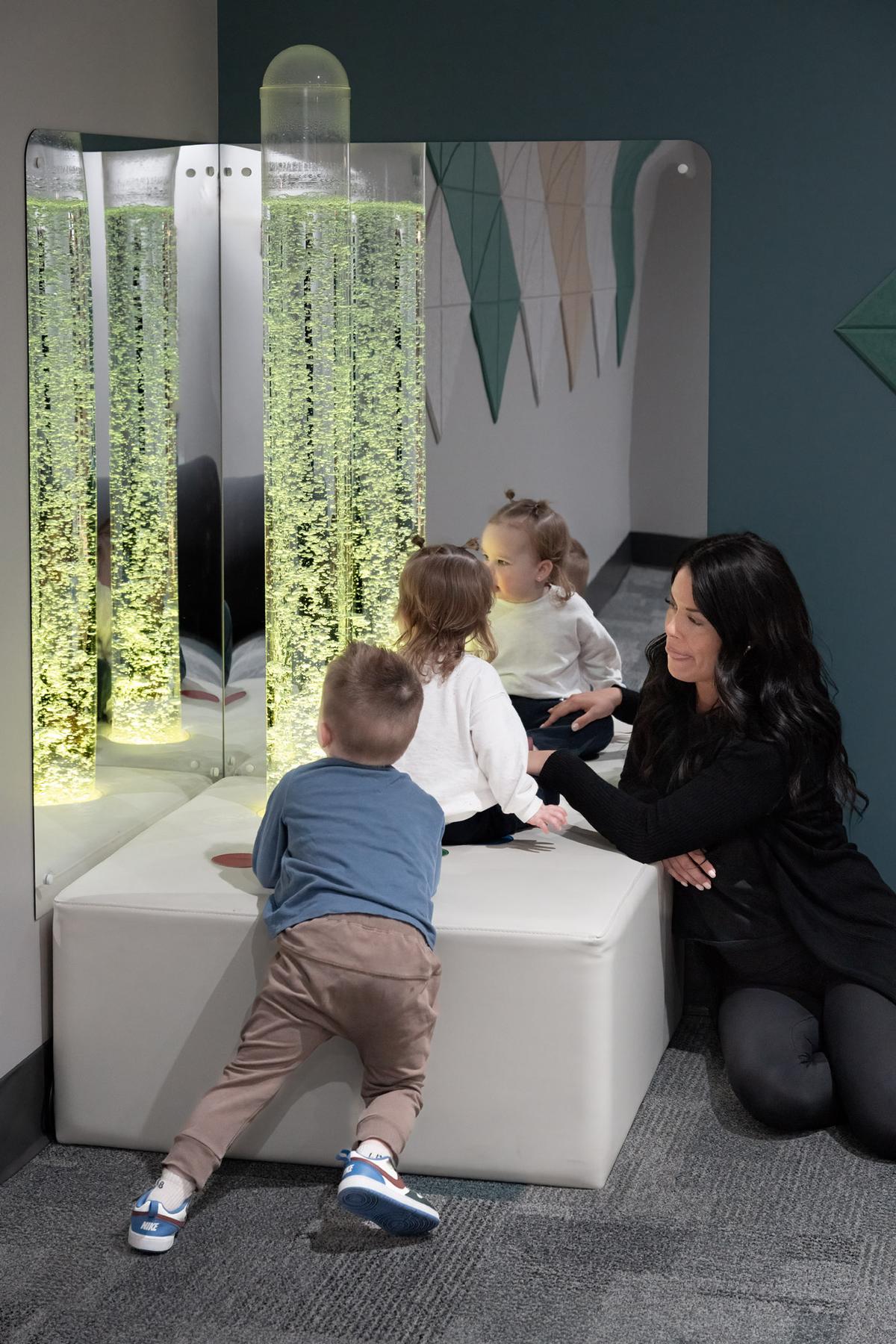
A growing number of airports have moved beyond quiet corners and now offer purpose-built sensory rooms. These are enclosed spaces designed to reduce overload, not just a bench in a low-traffic hallway. Salt Lake City International Airport opened a KultureCity-designed sensory room in Concourse A-west in March 2025, with two additional rooms planned for Concourse B. The airport also provides Hidden Disabilities Sunflower lanyards and offers pre-travel familiarisation tours. Contact the airport directly to ask about tour availability and scheduling.
San Francisco International Airport operates a Sensory Room in Harvey Milk Terminal 1 post-security near Gate C2. It includes a quiet area, an active area and a full-scale aircraft cabin replica for pre-flight familiarisation. The room's published hours are daily 5:00 a.m. to 11:00 p.m. Because terminal hours can shift, verify the current opening time on the SFO website before relying on it. Orlando International Airport opened Annie's Space Sensory Room in Terminal A, Level 3 in June 2025. It is a space-themed Snoezelen multi-sensory environment with published hours of 7 a.m. to 9 p.m. daily. MCO became a Certified Autism Center in April 2024. Again, confirm hours directly with the airport before travel day.
Chicago O'Hare and Midway International Airports take a mapping approach. They publish sensory maps on FlyChicago.com that highlight high-, medium- and low-sensory areas throughout the terminals. The maps cover noise levels, lighting, crowd density and strong-smell zones. The same airports offer sensory bags containing fidgets, headphones and visual aids at airport information desks, plus sensory point-of-view videos and downloadable social stories to help travellers prepare. A traveller who studies a sensory map before arriving can plan a walking route that avoids the most intense zones, then pick up a sensory bag as a backup.
The airline booking layer
Airport resources handle the ground experience. The flight itself requires a separate step at booking. The DPNA code is the international IATA Special Service Request code for passengers with intellectual or cognitive disabilities. A traveller can ask their airline to add it to their booking. The code alerts airline staff that accommodations may be needed, and most airlines do not require proof of diagnosis. Lufthansa publicly documents this code, but it is an IATA standard available across many carriers. Because airline special assistance booking deadlines vary, and because not every airline handles DPNA the same way, verify the deadline and the code's availability with your specific airline at the time of booking. A common industry window is 48 hours before departure, but do not assume that number applies to your ticket. Ask the airline directly.
Editorial advice: Request the DPNA code at the same time you call TSA Cares. That way the airport security team, the gate staff and the cabin crew all have a record that a traveller may need processing time, a familiarisation moment or a specific seating arrangement. No single request covers every stage of the journey, so layering them reduces the chance that information is lost between agencies.
Museums with verified sensory programs
Museums present a different sensory profile than airports. The challenge is less about rushing and more about sustained exposure to audio, video, crowds and unpredictable gallery layouts. Several major institutions now publish sensory guides that rate individual exhibition areas on sound, light, crowd level and seating availability. The American Museum of Natural History in New York provides a downloadable sensory guide with floor-by-floor maps using exactly those ratings. The museum also has a dedicated Sensory Room on Floor 1 next to the Futter Gallery. Check the museum's website for the Sensory Room's current hours before visiting.
The Smithsonian Institution runs a program called Morning at the Museum. It offers free sensory-friendly entry for neurodivergent children, teenagers and young adults and their families. Sessions occur on designated Saturdays or Sundays before the museum opens to the public. Pre-visit materials include social narratives and sensory maps. Registration is required. Because specific dates and registration availability change, verify the current schedule with the Smithsonian Office of Visitor Accessibility. Do not plan a trip around an assumed date.
The MIT Museum in Cambridge takes a different approach with Quiet Hours. Entry occurs one hour before public opening. During that time, exhibit audio is reduced or turned off, artwork audio is lowered, and signage is placed near dark or noisy experiences. The museum also lends headphones and fidgets. Quiet Hours are a recurring program, but confirm the schedule on the MIT Museum website before visiting.
Building a full city day with sensory guardrails
A low sensory city day is not about avoiding everything intense. It is about sequencing activities so that a traveller never goes too long without a known quiet option. Start by picking one anchor venue with a verified sensory program, such as a museum with a sensory guide or an attraction with a KultureCity certification. KultureCity has certified over 7,000 venues and events across 40 countries as Sensory Inclusive. Certification requires that at least 50 percent of staff undergo sensory-needs training and that the venue provides sensory bags and dedicated quiet spaces. A KultureCity-certified venue gives a traveller a predictable baseline: trained staff, a bag with tools and a place to retreat.
Build the rest of the day around that anchor. If the anchor is a morning museum visit, plan a low-stimulation lunch nearby and leave the afternoon flexible. Check whether the city's transit system publishes noise or crowding data. If not, budget for a quiet ride-share instead of a packed train at rush hour. The goal is not to eliminate sensory input but to make it predictable and interruptible.
Editorial advice: Carry your own familiar sensory tools even when a venue promises to provide them. A venue's sensory bag is a supplement, not a guarantee. Headphones that you know fit, a fidget that you know works and a loaded social story on your phone give you control if the venue runs out of supplies or if the quiet room is temporarily closed.
How to verify the details that change
Several facts in the guidance are marked as mutable by their own source authorities. Sensory room hours at SFO, MCO and the American Museum of Natural History can change. TSA Cares helpline hours and the 72-hour advance notice recommendation should be confirmed on the TSA website. Airline special assistance booking deadlines and DPNA code availability must be checked with the specific airline at the time of booking. Smithsonian Morning at the Museum dates and registration availability must be verified with the Smithsonian Office of Visitor Accessibility.
A practical workflow is to verify these details twice: once when you book your trip and again 72 hours before departure. Write down the name of the official operator or authority for each mutable fact rather than the current number. That way your plan stays accurate even if a venue changes its hours between your booking date and your travel date.
Sources and verification
- tsa.gov — Research source checked for this guide
- tsa.gov — Research source checked for this guide
- tsa.gov — Research source checked for this guide
- hdsunflower.com — Research source checked for this guide
- chicago.gov — Research source checked for this guide
- flychicago.com — Research source checked for this guide
Common Questions
What is the DPNA code and how do I request it?
The DPNA code is the international IATA Special Service Request code for passengers with intellectual or cognitive disabilities. Request it through your airline at the time of booking. Most airlines do not require proof of diagnosis. Because booking deadlines and code availability vary by carrier, confirm the process directly with your airline.
Do I need a diagnosis to use TSA Cares or the Hidden Disabilities Sunflower lanyard?
No. TSA Cares assists travellers with disabilities, medical conditions and sensory sensitivities without requiring a specific diagnosis. The Hidden Disabilities Sunflower lanyard is a discreet signal that you may need extra time or assistance; you do not need to explain your condition to wear one.
Can I stay with my companion during TSA screening?
Yes. TSA policy states that passengers with non-visible disabilities including autism spectrum disorder can be screened without being separated from their travelling companion.
Read next
-
 Wheelchair Rail Travel in Europe Booking Assistance and Connections
A practical guide to Wheelchair Rail Travel in Europe Booking Assistance and Connections.
-
 How to Verify an Accessible Hotel Room Before You Pay
A practical guide to How to Verify an Accessible Hotel Room Before You Pay.
-
 Flying With a Power Wheelchair A Damage Prevention Checklist
A practical guide to Flying With a Power Wheelchair A Damage Prevention Checklist.
-
 Accessible Airport Transfer Planning When Mobile Service Fails
Plan a wheelchair-accessible airport transfer with confirmed vehicle details, clear pickup points, offline addresses, and backup contacts if mobile service fails.