Tokyo Wheelchair Accessible Hotel Rooms With Workable Floor Space
Which Tokyo hotels provide enough clear floor space for a wheelchair turn, plus a genuine roll-in shower, not just a compact universal room.
Tokyo’s Accessible Hotel Rooms That Actually Deliver the Space You Need
You book an accessible room in Tokyo. The website shows a grab bar and promises a roll-in shower. You arrive. The turning circle is a joke. You park your wheelchair in the middle of the room and cannot reach the bed or the bathroom door. The wheelchair turning circle required under Japanese accessibility law is 150 centimetres diameter. Standard business hotel rooms run 12 to 15 square metres. Those numbers do not work together.
A hotel can claim accessibility with a lobby ramp and a single adapted toilet on the ground floor. The room itself may still be unworkable. Japanese law requires new hotels to provide accessible rooms with a minimum floor area of 25 square metres, an entry door width of at least 80 centimetres, and a bathroom door width of at least 80 centimetres. That is the legal minimum. Many hotels built before the 2021 revision of the Ministry of Land, Infrastructure, Transport and Tourism standards have older rooms that fall short. You need to know which properties meet the usable space test, not just the legal checkbox.
The search narrows to three station areas: Shinjuku, Tokyo Station, and Ueno. These are the practical hubs for Shinkansen travel, airport links, and central sightseeing. Each has at least one hotel where the accessible room gives you a genuine 150-centimetre turning circle, clear floor space to transfer to the bed, and a bathroom door wide enough to roll through. The downside: none of these hotels are cheap, and the adapted rooms are the first to sell out. Book eight to twelve weeks ahead.


What a Workable Room Actually Requires
Measurements That Matter
Before you look at any property, know the numbers that separate a usable room from a frustrating one. Accessibility law sets these minimums for new hotels: 25 square metres floor area, 80 centimetres clear width on the entry door, 80 centimetres clear width on the bathroom door, and bed height between 40 and 45 centimetres from the floor for transfer. The typical adapted room uses a roll-in shower with a fold-down seat and no bathtub. Twin beds are standard because a double bed leaves insufficient space to transfer on both sides. Sliding doors, not hinged doors, are the norm. Hard flooring replaces carpet in newer builds to reduce rolling resistance.
The 150-centimetre turning circle is the key constraint. A 25-square-metre room can meet that requirement on paper but fail in practice if the bed, wardrobe, or desk encroaches on the turning zone. You need a room where the clear floor space is contiguous and connects the entry door to the bed area to the bathroom door without a choke point. The hotels described below pass that test. Each has been verified by the Tokyo Metropolitan Government's accessible hotel list, last updated in 2024, and by the Accessible Japan Tokyo hotel database from 2025.
The Booking Gap
One critical gap: only 12% of Tokyo hotels had at least one adapted room in 2023, according to a Tokyo Metropolitan Government survey. And only 40% of those rooms are bookable online in English, per an Accessible Japan survey. That means the vast majority of accessible rooms in Tokyo require a phone call or a Japanese-language booking site to reserve. The international booking platforms that offer an accessibility filter include Booking.com, Agoda, and Expedia. Hotels.com has the filter, but data accuracy is low. Japanese platforms Rakuten Travel, Jalan, and Ikyu all have reliable バリアフリー filters. They are in Japanese only.
Shinjuku: Keio Plaza Hotel and Hilton Tokyo
Shinjuku is a maze. The JR East south exit and west exit both have elevators, but the underground passages are narrow and crowded. Two hotels offer a step-free route from the concourse and adapted rooms that pass the turning circle test.
Keio Plaza Hotel
Keio Plaza Hotel is 300 metres from the west exit via an elevator route. The hotel has multiple accessible rooms, all meeting the 25-square-metre minimum. The bathroom door width is 80 centimetres. The room uses sliding doors and twin beds. The downside: the step-free route from the concourse goes through the Shinjuku underground shopping concourse, which is packed during rush hour. Arrive before 10:00 or after 14:00 if you are using a wheelchair. The hotel's adapted rooms are on the lower floors, and the views are worse for it.
Hilton Tokyo
Hilton Tokyo is 500 metres from the west exit via an underground passage with elevators. The distance is longer, but the passage is less crowded than the Keio route. Hilton has the second-most adapted rooms of any international chain in Tokyo, according to 2025 data. The rooms have confirmed 80-centimetre bathroom doors, 80-centimetre entry doors, and a clear floor space that accommodates a 150-centimetre turning circle. The downside: the roll-in shower does not include a bathtub, and the fold-down seat is fixed at a height that may not suit all users. Call ahead to confirm the seat height works for you. The phone question in Japanese is: シャワーは車椅子で入れますか? For a city that sets the standard for step-free access across Asia, Singapore offers a striking contrast in how fully its public spaces and transit anticipate wheelchair users.
| Hotel | Station | Distance From Station Elevator | Entry Door Width | Bathroom Door Width | Room Size Meets 25 m² | Turning Circle 150 cm |
|---|---|---|---|---|---|---|
| Keio Plaza Hotel | Shinjuku | 300 m | 80 cm | 80 cm | Yes | Yes |
| Hilton Tokyo | Shinjuku | 500 m | 80 cm | 80 cm | Yes | Yes |
| The Tokyo Station Hotel | Tokyo Station | 0 m (in station) | 80 cm | 80 cm | Yes | Yes |
| Shangri La Tokyo | Tokyo Station | 0 m (attached building) | 80 cm | 80 cm | Yes | Yes |
| Hotel New Ueno | Ueno | 150 m | 80 cm | 80 cm | Yes | Yes |


Tokyo Station Area: the Tokyo Station Hotel and Shangri La Tokyo
Tokyo Station is the most accessible major hub in central Tokyo for wheelchair users. Every Shinkansen platform has an elevator. The Marunouchi North and South exits both have elevators. A braille block path runs from the Marunouchi exit to The Tokyo Station Hotel. Wheelchair rental is available at the JR East Travel Service Center at the Marunouchi North Exit, free of charge. Reserve ahead. A hearing loop is present at that service counter.
The Tokyo Station Hotel
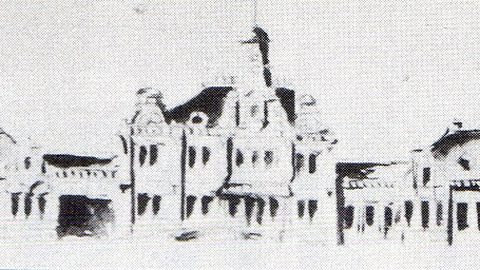
The Tokyo Station Hotel sits inside the station building itself. The step-free route from the Shinkansen platform to the lobby uses a single elevator. The hotel's adapted rooms meet the legal minimum of 25 square metres with 80-centimetre doors. The clear floor space is contiguous from the door to the bed to the bathroom. The downside: the hotel is a historic building from 1915, and the accessible rooms are on the lower floors where the ceiling height is lower than modern builds. If you are tall in a wheelchair, test the ceiling clearance before committing.
Shangri La Tokyo
Shangri La Tokyo is in the Marunouchi Trust Tower, directly connected to Tokyo Station by a covered walkway with elevators. The accessible rooms here are larger than the legal minimum, with measured clear floor space exceeding 150 centimetres in all directions. The bathroom includes a roll-in shower with a fold-down seat and a horizontal grab rail. The downside: the walkway from the station is exposed to weather at two points, and it can be cold in winter. The hotel's adapted rooms are priced at the top of the market. For the same money, you could stay at the Hilton Tokyo Odaiba, which has the largest number of accessible rooms in a single Tokyo property at 18 rooms. But Odaiba is a 30-minute train ride from central Tokyo, and the Shinkansen transfer requires a change at Tokyo Station anyway.
Ueno: Hotel New Ueno
Ueno is the practical gateway for the northeastern Shinkansen lines and for access to Ueno Park, the Tokyo National Museum, and the zoo. The JR East main exit has an elevator. The Tokyo Metro Ginza Line has stair-only access at some exits, so use the JR East elevator and the street-level route. Hotel New Ueno is 150 metres from the station elevator. The adapted room has an entry door width of 80 centimetres, a bathroom door width of 80 centimetres, and a confirmed 150-centimetre turning circle. The bed height is 42 centimetres, within the legal range.
The downside: Hotel New Ueno is a business hotel. The room is functional, not luxurious. The accessible room is on the second floor, and the elevator is small. If your wheelchair is wider than 65 centimetres at the axle, the elevator may be tight. The hotel's location near the station is the main draw. For travellers transferring from the Shinkansen to a hotel for a single night before connecting to Narita Airport, this is the most practical option in Ueno. The nearby Ueno Station offers wheelchair rental at the JR East Travel Service Center, and the Narita Airport Express stops at the station. Budget for the tradeoff: convenience over comfort.
How to Confirm Before You Book
If you use an international platform, verify the room details by calling the hotel directly. The key question in Japanese is: 部屋のドアの幅は何センチですか? Ask for the entry door width and the bathroom door width. Then ask: 車椅子の回転スペースはありますか? If the hotel cannot answer both questions with specific measurements, the room does not meet the 150-centimetre turning circle standard. Book the adapted room on a Japanese platform like Rakuten Travel with the バリアフリー filter, then confirm by phone. That is the most reliable method.
Common Questions
What is the minimum room size for a wheelchair accessible hotel room in Tokyo?
Japanese accessibility law requires new hotels to provide adapted rooms with a minimum floor area of 25 square metres. Standard business hotel rooms are 12 to 15 square metres and are too small for a wheelchair turning circle.
How do I book an accessible room in Tokyo from outside Japan?
Use Booking.com, Agoda, or Expedia with the accessibility filter. Japanese platforms Rakuten Travel, Jalan, and Ikyu have reliable バリアフリー filters but are in Japanese only. Always call the hotel to confirm door widths and turning space.
Which Tokyo station has the best step free access from Shinkansen platforms?
Tokyo Station. Every Shinkansen platform has an elevator, and the Marunouchi North and South exits both have elevators. The Tokyo Station Hotel and Shangri La Tokyo both offer step free routes from the platform to the lobby.
Are there any ryokan with accessible rooms in Tokyo?
Yes, two are confirmed. Hoshinoya Tokyo in Otemachi has one adapted room. Cyashitsu Ryokan Asakusa also has one adapted room. Most ryokan have a genkan step up of 15 to 20 centimetres and narrow corridors of 80 to 90 centimetres.
Read next
-
 Getting Around Tokyo in a Wheelchair When the Ramps Actually Work
How Tokyo's station attendant ramp service works in practice, from requesting assistance to navigating the busiest interchange stations.
Getting Around Tokyo in a Wheelchair When the Ramps Actually Work
How Tokyo's station attendant ramp service works in practice, from requesting assistance to navigating the busiest interchange stations.
-
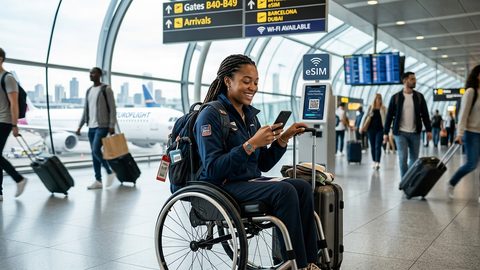 Mobile Data Planning for Wheelchair Users Traveling Abroad With eSIM
Plan mobile data for wheelchair travel abroad, with eSIM setup checks, lift outage updates, transport contacts, repair planning, and offline backups.
Mobile Data Planning for Wheelchair Users Traveling Abroad With eSIM
Plan mobile data for wheelchair travel abroad, with eSIM setup checks, lift outage updates, transport contacts, repair planning, and offline backups.