Accessible Transport Across London What Actually Works
A practical look at accessible transport in London covering bus ramps, Tube lift gaps, and the reality of step-free stations for wheelchair users.
Step-Free Does Not Mean Gap-Free
Only 66 of London's 272 Tube stops give you level access from street to train. The other 30 that TfL labels as step-free only get you from street to platform, leaving a gap between platform and train that can be 200 mm wide and 170 mm high. That gap matters. At curved locations like Bank, Monument, or Embankment on the District line, that gap is severe. A manual boarding ramp exists at every step-free stop, but you have to request it at the ticket hall or press the help point on the platform, then wait 2 to 5 minutes for a staff member to bring it. Outside peak hours at some quieter stations, that wait stretches longer. Gateline-only staffing means fewer people to deploy the ramp. Do not assume any Underground stop is fully accessible just because the map shows a blue wheelchair symbol. That symbol only guarantees step-free from street to platform. The gap to the train is your problem to solve.
Buses: the Most Reliable Option with One Hard Limit
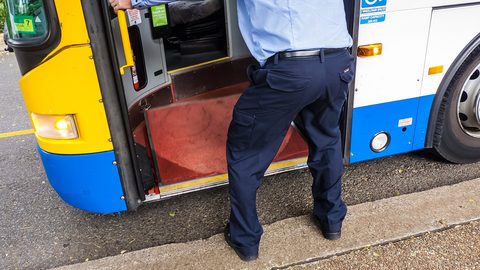
Every one of London's bus routes uses a low-floor vehicle with a powered ramp. 100 percent coverage. That is the best access metric on the entire TfL network. The driver operates the ramp at the centre doors. You board from a raised kerb at any designated stop. The ramp gradient runs 1:8 to 1:12 depending on kerb height and road camber, which is manageable for most manual chairs and all powered chairs under 300 kg.
One Wheelchair Space Per Bus
Here is the limit: each bus has exactly one wheelchair space. One. If that space is taken, you wait for the next bus. The space is 1300 mm by 750 mm minimum, with a backrest, a lateral support pad, and a push-button alarm strip. Some buses position it forward-facing, some rearward. The driver is not allowed to move the bus until you are secured. That is TfL policy confirmed in 2024.
If the Ramp Fails
If the ramp fails, the driver must call control and you are entitled to alternative transport at TfL expense. Call 0343 222 1234 for help, or textphone 020 7649 9123. Every bus has next-stop audio and visual announcements via the iBus system, installed between 2007 and 2012 and still operational in 2026. Induction loops are fitted at the wheelchair space and priority seating on all buses built or retrofitted since 2020. Assistance dogs ride free, no ticket needed. They travel in the floor space at the wheelchair area or under a priority seat.

.png)
The Tube: 96 Step-Free Stations, but Only 66 Give You the Train
Of the 96 stations TfL counts as step-free, only 66 have a ramp or level boarding to get you on the train. The remaining 30 have a step and a gap. The gap ranges from 25 mm to 200 mm horizontally and 0 to 170 mm vertically, depending on the station's curvature and the rolling stock. The manual ramp supplied by staff is 800 mm wide, 1200 mm long, and rated for 300 kg. It works, but it requires a human to bring it. At unstaffed hours, even at a step-free station, you may find only gateline staffing. The person who can bring the ramp might be on the gate and cannot leave it. Plan for that.
Three Lines That Deliver Fully
Three lines give you full street-to-train access at every station: the Jubilee line (27 stations, all step-free from street to train), the Victoria line (16 of 16), and the Elizabeth line (41 stations, all step-free street to train with level boarding in the central core). The Elizabeth line is the gold standard. Central stations from Paddington to Abbey Wood have level boarding. No ramp needed. Outer stations have a gap of up to 75 mm horizontal and 50 mm vertical, with a manual ramp available on request. Each nine-car Class 345 train has two wheelchair spaces in carriages 1 and 9, each 1300 mm by 750 mm with an adjacent companion seat. There is an accessible toilet 2000 mm by 1500 mm in carriage 5. Lifts at central stations are 2000 mm by 1500 mm with an 1100 mm door width. That gives you a full turning circle.
Patchier Lines and the Stations to Avoid
Other lines are far patchier. The Piccadilly line has only 16 of 53 stations step-free from street to platform. The Central line has 14 of 49, and Bank on the Central line has a severe gap. The Bakerloo line has just 5 of 25 stations step-free from street to platform, with nothing south of Queen's Park except Wembley Central. The Northern line has 16 of 52, and its deep-level stations require multiple lifts. The Waterloo and City line has 0 of 2 stations step-free. The lifts at Bank and Waterloo do not serve the W&C platforms directly.
Interchanges That Work and Ones That Do Not
Major interchanges where you can transfer from street to train without a manual ramp: Green Park for the Jubilee and Victoria lines (Piccadilly platform still needs a ramp), King's Cross St Pancras for the Circle, H&C, Metropolitan, Victoria, and Elizabeth lines, London Bridge for the Jubilee and Northern lines, and Stratford for the Jubilee, Central, Elizabeth, and DLR lines. Major stations that are not step-free at all as of August 2026: Bank (Central and Northern platforms), Covent Garden (lifts exist but do not serve Piccadilly platforms directly), Holborn, Leicester Square, Piccadilly Circus, Oxford Circus, Bond Street (Jubilee and Central lines), Camden Town, and Knightsbridge. Step-free access at Knightsbridge opened in 2025. Verify operational status before travel.
Lift Outages: the Real Problem
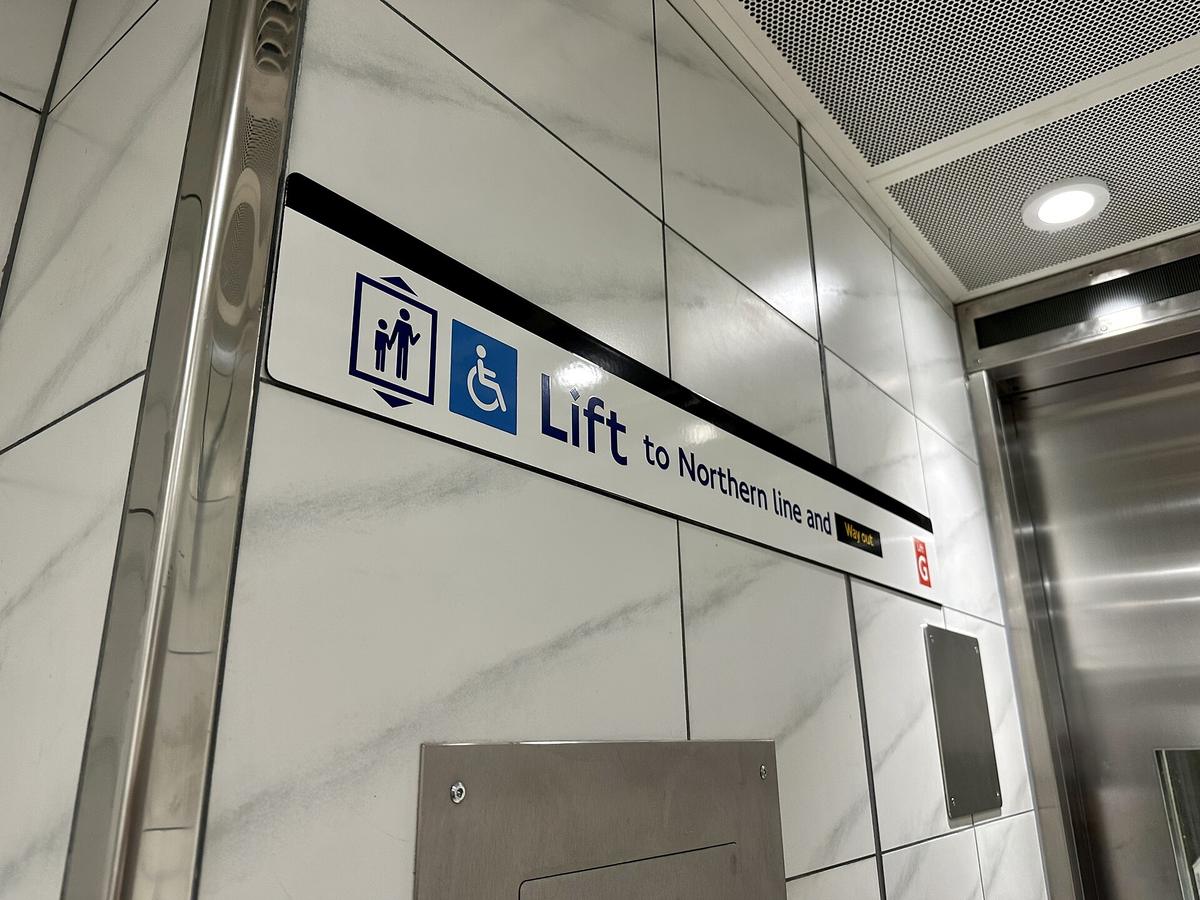
The lift at your station may be out. TfL publishes live lift status on the TfL Go app and on the @TfLAccess X/Twitter feed. National Rail stations have their own feeds, like @NetworkRailLBG for London Bridge. TfL's Journey Planner has a step-free filter that automatically reroutes you around known outages, updated every 15 minutes. TfL publishes planned lift closures 7 days ahead on its website. National Rail publishes 14 days ahead. Check before you leave. If you arrive at a station and the lift is broken, the step-free Journey Planner is your fastest fallback. Do not rely on a single route.
| Line | Step-Free Street To Platform | Step-Free Platform To Train | Key Gap Station |
|---|---|---|---|
| Bakerloo | 5 of 25 stations | 5 of 25 | None south of Queen's Park except Wembley Central |
| Central | 14 of 49 stations | 14 of 49 | Bank: severe platform-train gap |
| Circle | 29 of 29 stations | Variable, ramp required at many | Platform-train gap at curved platforms |
| District | 42 of 60 stations | Variable | Bank, Monument, Embankment: severe gaps |
| Hammersmith & City | 29 of 29 stations | Variable | Platform-train gap varies by station |
| Jubilee | 27 of 27 stations | 27 of 27 | None |
| Metropolitan | 29 of 34 stations | 29 of 34 | 5 non-step-free stations |
| Northern | 16 of 52 stations | 16 of 52 | Multiple lift transfers at deep-level stations |
| Piccadilly | 16 of 53 stations | 16 of 53 | Heathrow terminals all step-free |
| Victoria | 16 of 16 stations | 16 of 16 | None |
| Waterloo & City | 0 of 2 stations | 0 of 2 | Lifts do not serve W&C platforms |
| Elizabeth | 41 of 41 stations | 41 of 41 | Minor gap at outer stations only |

Black Cabs, DLR, Overground, and the Rest
Black Cabs
Every licensed London black cab has been wheelchair accessible since 2000. That is mandatory. The LEVC TX model, the current standard from 2018, uses a rear ramp or side door with an integrated fold-out ramp, rated for 300 kg. The ramp gradient is 1:5 to 1:8. The wheelchair space is 1200 mm by 700 mm with 1350 mm headroom. You stay in your chair facing rearward, with a seatbelt and a manual restraint system the driver must secure. Induction loops are fitted in all LEVC TX models. Hail a cab on the street, at a rank, or book through Gett, FreeNow, or Uber. Specify a wheelchair-accessible vehicle. No surcharge for wheelchair use. Maximum capacity: 5 passengers plus wheelchair user in the TX, 4 in the older TX4.
DLR, Overground, Tramlink, and Cable Car
The DLR is 100 percent step-free from street to train with level boarding at every station. No staff on the trains, but platform staff are at key stops. The newer B07 stock, introduced 2023, has 2 designated wheelchair spaces per carriage. The older B92 and B2K stock has 1 per carriage. The London Overground is 100 percent step-free from street to platform as of 2023, but a manual ramp is required at most stations to board the train. Newer stops like Barking Riverside have level boarding. The Tramlink is 100 percent step-free with level boarding at all stops and 2 wheelchair spaces per tram. The Emirates Air Line cable car is step-free at both terminals, with a gondola door width of 800 mm and a wheelchair space of 1200 mm by 700 mm. Staff will slow or stop the gondola on request. London River Services has 7 accessible piers: Westminster, London Eye, Bankside, Tower, North Greenwich, Greenwich, and Royal Wharf. The tidal step height at these piers varies from 0 to 500 mm. Check the tide before you go.
National Rail and Passenger Assist
For National Rail, the turn-up-and-go assistance service is available at all staffed stations without pre-booking. This is called Passenger Assist, introduced in April 2022. During station staffing hours, which are 06:00 to 22:00 at major London terminals, you can request help on arrival. Pre-book by calling 0800 022 3720 or textphone 0800 022 3721, by 22:00 the day before travel. The manual boarding ramp at National Rail stations is 800 mm wide and 1200 to 1500 mm long. The platform-train gap varies wildly. It is worst at curved platforms such as London Bridge platforms 1 to 6 and Paddington platforms 1 to 8. Level boarding is available on the Thameslink core from St Pancras to Blackfriars. Most London commuter trains have 2 wheelchair spaces per unit. The Class 700 Thameslink trains have 2 spaces per 8-car unit. The Class 710 Overground trains have 2 per 4-car unit. Accessible toilets are on all new stock built since 2020, and older stock was supposed to be retrofitted by a 2025 deadline that had exemptions.
Who Power Wheelchair Users Suit and Who They Do Not
Power wheelchair users who have measured their chair and know its turning radius will find London accessible. They are the ones who will check lift status before every journey, who will call Passenger Assist the night before a train trip, and who will accept that the Piccadilly line is not a reliable option outside the Heathrow terminals. London is not for someone who wants to travel spontaneously through the Tube without checking anything. It is not for someone using a large power chair that cannot fit in a 900 mm by 1200 mm lift or turn around in a 1300 mm by 750 mm bus bay. The single thing that goes wrong most often on the TfL network is a lift outage at the station you planned to use, with no published alternative route that is also step-free, leaving you stranded below ground or above it with no way to cross the gap.
Common Questions
How do I know if the lift at my Tube station is working before I leave?
Open the TfL Go app or check the @TfLAccess X/Twitter feed. The app shows live lift status for all TfL stations. The Journey Planner with the step-free filter will reroute you around known outages, updated every 15 minutes.
What do I do if the bus ramp is broken?
The driver must call TfL control. You are entitled to alternative transport at TfL expense. Report the issue by calling 0343 222 1234 or texting 020 7649 9123. Do not let the driver move the bus until you are secured, per TfL policy.
Which Tube lines are fully step-free from street to train?
The Jubilee line (27 stations), Victoria line (16 stations), and Elizabeth line (41 stations) are 100 percent step-free from street to train. The Elizabeth line also has level boarding in the central core, no ramp required.
Can I hail a black cab if I use a wheelchair?
Yes. Every licensed black cab since 2000 is wheelchair accessible. Hail on the street, use a taxi rank, or book via Gett, FreeNow, or Uber (specify WAV or accessible vehicle). No surcharge for wheelchair use.
Which major London stations are not step-free at all in 2026?
Holborn, Leicester Square, Piccadilly Circus, Oxford Circus, Bond Street (Jubilee and Central lines only), Camden Town, and Covent Garden (lifts do not serve Piccadilly line platforms directly). Bank station is partially step-free but Central and Northern platforms are not.
Read next
-
 Accessible Hotels in London Chains Boroughs and the Questions to Ask
Which London hotels offer genuine wet rooms and turning space rather than just a grab bar, and the questions to ask before you book.
Accessible Hotels in London Chains Boroughs and the Questions to Ask
Which London hotels offer genuine wet rooms and turning space rather than just a grab bar, and the questions to ask before you book.
-
 London Museums and Attractions with Free Carer Entry and Step-Free Access
Which London museums and attractions offer free carer entry, what proof you need, and the pre-booking steps that catch out spontaneous visitors.
London Museums and Attractions with Free Carer Entry and Step-Free Access
Which London museums and attractions offer free carer entry, what proof you need, and the pre-booking steps that catch out spontaneous visitors.
-
 Which Cities Are Genuinely Accessible Ranked by What Actually Matters
A candid ranking of accessible cities worldwide based on transport, terrain, hotels and the real experience of getting around in a wheelchair.
Which Cities Are Genuinely Accessible Ranked by What Actually Matters
A candid ranking of accessible cities worldwide based on transport, terrain, hotels and the real experience of getting around in a wheelchair.
-
 What Accessible Actually Means and Why Step-Free Is Not the Same Thing
Step-free is a measurement, accessible is a promise, and wheelchair friendly is often just optimism. Here is how to tell them apart.
What Accessible Actually Means and Why Step-Free Is Not the Same Thing
Step-free is a measurement, accessible is a promise, and wheelchair friendly is often just optimism. Here is how to tell them apart.
-
 Flying to London with a Wheelchair Your Rights and the Process
How flying with a wheelchair to London actually works, from Heathrow assistance to your legal rights if the airline damages your mobility equipment.
Flying to London with a Wheelchair Your Rights and the Process
How flying with a wheelchair to London actually works, from Heathrow assistance to your legal rights if the airline damages your mobility equipment.
-
 Booking an Accessible Hotel Room in London Questions That Get Real Answers
The exact questions to ask London hotels about accessible rooms, from roll-in shower dimensions to evacuation plans, so you book a room that actually works.
Booking an Accessible Hotel Room in London Questions That Get Real Answers
The exact questions to ask London hotels about accessible rooms, from roll-in shower dimensions to evacuation plans, so you book a room that actually works.
-
 London Accessible Transport Trains Buses Taxis and the Tricky Bits Between
London accessible transport beyond the step-free Tube map: the platform gaps, bus bay conflicts, and kerb problems no journey planner mentions.
London Accessible Transport Trains Buses Taxis and the Tricky Bits Between
London accessible transport beyond the step-free Tube map: the platform gaps, bus bay conflicts, and kerb problems no journey planner mentions.
-
 Mobile Data Planning for Wheelchair Users Traveling Abroad With eSIM
Plan mobile data for wheelchair travel abroad, with eSIM setup checks, lift outage updates, transport contacts, repair planning, and offline backups.
Mobile Data Planning for Wheelchair Users Traveling Abroad With eSIM
Plan mobile data for wheelchair travel abroad, with eSIM setup checks, lift outage updates, transport contacts, repair planning, and offline backups.