Comparing the Most Accessible Cities for Wheelchair Users Worldwide
A candid ranking of accessible cities worldwide based on transport, terrain, hotels and the real experience of getting around in a wheelchair.

.jpg)
What Stops a Wheelchair in Eight Major Cities
Every accessibility guide ranks cities. Few rank them on what actually stops you moving. Step free stations matter. So do pavements, taxis, terrain and the honest fact that a city with full metro step free access can still leave you stranded at a bridge with no kerb cut. London, New York, Barcelona, Singapore, Tokyo, Amsterdam, Paris and Berlin are compared here on five criteria that determine whether a trip works or whether it fails. The winner is Singapore. But pick Barcelona if hills are your enemy and avoid Paris unless you are ready for the worst metro access in the developed world.
| City | Step Free Rail/Metro (%) | Pavement Condition | Accessible Taxis (%) | Terrain | Cultural Attitude |
|---|---|---|---|---|---|
| Singapore | 100% MRT / 100% rail (LTA 2024) | 99% footways rated good (LTA 2023) | 13.9% of 18,000 (LTA 2024) | Flat core; max 5% gradient | Turn up and go at all MRT stations |
| Barcelona | 89.7% metro (TMB 2024) | No citywide audit; Eixample good, Ciutat Vella gaps | 11.4% of 10,500 (AMB 2024) | Central grid below 3%; hillside barrios 12% | Turn up and go at step free stations |
| Berlin | 64.0% U-Bahn / 78.6% S-Bahn (BVG/DB 2024) | No citywide audit; 90% signalised kerb cuts | 5.0% of 8,000 (Senat 2024) | North German Plain; max 5% | Turn up and go at all step free stations |
| Tokyo | 73.6% combined rail (JR East/Metro/Toei 2023-2024) | 88% kerb cuts at signalised crossings; side streets narrow | National figure only; Tokyo share not published | Central wards flat; western wards 200 m | Pre booking required 24 hours ahead at most stations |
| Amsterdam | 100% metro / 72% tram low floor (GVB 2024) | ~60% cobblestone in canal belt; inconsistent kerb cuts | No fleet wide figure; bookable via dispatch | Flat city; bridge approaches exceed 10% | Turn up and go at metro; tram step free fleet incomplete |
| London | 55.8% combined rail (TfL/Network Rail 2024) | 11% flagged as needing maintenance (DfT 2023) | 1.2% PHV; 100% black cabs (TfL 2024) | Gently undulating; 20% gradient on Fox Hill | Turn up and go at all Tube stations; 38% of TfL accessibility pages contain errors |
| New York | 30.7% subway (MTA 2024) | 8.6% sidewalk miles rated fair or poor (DOT 2023) | 3.5% for hire fleet; 8.9% yellow taxis (TLC 2024) | Coastal plain; Manhattan below 5% except Washington Heights | No gap fillers on subway; bridge plates deployed on request |
| Paris | 7.5% metro / 100% RER (RATP 2024) | No citywide audit; 95% signalised kerb cuts | 5.4% of 18,500 (Prefecture 2024) | Seine basin; Montmartre 15% gradient | Métro assistance requires call ahead at 18 of 23 step free stations |
Why Singapore Wins and What it Costs
Singapore scores first or second on every axis. Its MRT is fully step free. Its pavement condition audit shows 99% rated good, the highest in this group. Kerb cuts cover every signalised crossing and 98% of unsignalised ones. The terrain is nearly flat. Every MRT station operates a turn up and go promise with no pre booking required. You arrive at the station, you ask for assistance, you get it.
The weakness is taxis. Only 13.9% of Singapore's 18,000 taxis are wheelchair accessible, according to the Land Transport Authority's 2024 figure. Book one by phone or via the MyTransport.SG app. On street hailing is unreliable. Budget five minutes for a booked accessible taxi. Skip the hail and book ahead.
Why Barcelona Runs Singapore Close
Barcelona's metro step free rate is 89.7%, the second highest in Europe after Amsterdam's metro. But Amsterdam's tram fleet is only 72% low floor. Barcelona's bus fleet is fully low floor and ramped. Its accessible taxi share sits at 11.4%, almost identical to Singapore's in percentage terms though the fleet is smaller. The central Eixample district has consistent kerb cuts. The terrain in the central grid stays below 3% gradient.
Pick Barcelona over Singapore only if hills are your primary problem. Singapore is flat. Barcelona is flatter in the core. But Barcelona's Ciutat Vella has narrow streets with gaps in kerb cuts. Its Montjuïc and hillside barrios reach 12% gradient. Stay in the Eixample or the waterfront and you will not encounter a slope that stops you.
The Cities That Disappoint and the One to Skip
London has fully wheelchair accessible buses and black cabs. Its combined rail step free rate is 55.8%. That sounds reasonable until you check the London Underground figure alone: 33.8% of Tube stations are step free. The DLR, Overground and Elizabeth line are all fully step free, but the Tube is the spine of the network. TfL's own audit found that 38% of station accessibility pages contained at least one error on the date checked in 2023. Real time lift status exists on the TfL website but relies on manual confirmation at each station. Use the turn up and go promise at all Tube stations. It works. But you will be planning around gaps.
New York: A Workable System That Is Slow
New York's subway step free rate is worse than London's at 30.7%. Its accessible taxi share is 3.5% of the total for hire fleet. The MTA reports elevators in service 96.5% of scheduled hours, a 3.5% outage rate. There are no platform gap fillers on any station. Bridge plates are deployed manually by station staff on request. That system works but it is slow. You will wait for a staff member to arrive, wait for the plate to be positioned, then board. Do not take the New York subway between 11pm and 6am when station staff are minimal.
Paris: The Worst Metro Access in the Group
Paris is the worst. Its Métro step free rate is 7.5%. Twenty three stations out of 308. The RER is fully step free within city limits, so you can use the RER to cross town, but the Métro is essentially unusable for a wheelchair user who cannot manage stairs. The accessible taxi fleet is 5.4% of 18,500 vehicles. The 2023 APF France handicap audit found that 42% of Métro accessibility information on the RATP website contained outdated or incorrect detail. Skip Paris as a primary destination if you rely on public metro access. Use the RER and buses, which are both fully step free, and book accessible taxis in advance by phone.
Worth it if
- Singapore: 100% MRT step free, 99% good pavements, flat terrain, turn up and go at all stations
- Barcelona: 89.7% metro step free, 100% accessible buses, 11.4% accessible taxis, flat Eixample core
- Berlin: 64% U-Bahn step free, turn up and go at all step free stations, low gradients
- Tokyo: 73.6% combined rail step free, excellent tactile paving and kerb cuts at signalised crossings
Skip it if
- Paris: 7.5% Métro step free, 42% of online accessibility info incorrect, call ahead required at most step free Métro stations
- New York: 30.7% subway step free, no gap fillers, bridge plate manual deployment only, 0% hearing loop buses
- London: 33.8% Tube step free, 11% pavement flagged for maintenance, 38% of station pages contain errors
- Amsterdam: 60% cobblestone in canal belt, 200 bridges with gradients exceeding 10%, inconsistent kerb cuts in heritage zones

Read next
-
 Accessible Hotels in London Chains Boroughs and the Questions to Ask
Which London hotels offer genuine wet rooms and turning space rather than just a grab bar, and the questions to ask before you book.
Accessible Hotels in London Chains Boroughs and the Questions to Ask
Which London hotels offer genuine wet rooms and turning space rather than just a grab bar, and the questions to ask before you book.
-
 Getting Around London for Disabled Travellers Buses Lifts and the Gaps
A practical look at accessible transport in London covering bus ramps, Tube lift gaps, and the reality of step-free stations for wheelchair users.
Getting Around London for Disabled Travellers Buses Lifts and the Gaps
A practical look at accessible transport in London covering bus ramps, Tube lift gaps, and the reality of step-free stations for wheelchair users.
-
 London Museums and Attractions with Free Carer Entry and Step-Free Access
Which London museums and attractions offer free carer entry, what proof you need, and the pre-booking steps that catch out spontaneous visitors.
London Museums and Attractions with Free Carer Entry and Step-Free Access
Which London museums and attractions offer free carer entry, what proof you need, and the pre-booking steps that catch out spontaneous visitors.
-
 What Accessible Actually Means and Why Step-Free Is Not the Same Thing
Step-free is a measurement, accessible is a promise, and wheelchair friendly is often just optimism. Here is how to tell them apart.
What Accessible Actually Means and Why Step-Free Is Not the Same Thing
Step-free is a measurement, accessible is a promise, and wheelchair friendly is often just optimism. Here is how to tell them apart.
-
 Flying to London with a Wheelchair Your Rights and the Process
How flying with a wheelchair to London actually works, from Heathrow assistance to your legal rights if the airline damages your mobility equipment.
Flying to London with a Wheelchair Your Rights and the Process
How flying with a wheelchair to London actually works, from Heathrow assistance to your legal rights if the airline damages your mobility equipment.
-
 Booking an Accessible Hotel Room in London Questions That Get Real Answers
The exact questions to ask London hotels about accessible rooms, from roll-in shower dimensions to evacuation plans, so you book a room that actually works.
Booking an Accessible Hotel Room in London Questions That Get Real Answers
The exact questions to ask London hotels about accessible rooms, from roll-in shower dimensions to evacuation plans, so you book a room that actually works.
-
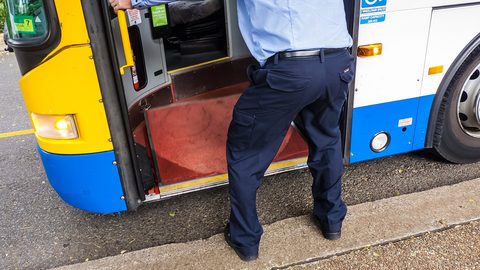 London Accessible Transport Trains Buses Taxis and the Tricky Bits Between
London accessible transport beyond the step-free Tube map: the platform gaps, bus bay conflicts, and kerb problems no journey planner mentions.
London Accessible Transport Trains Buses Taxis and the Tricky Bits Between
London accessible transport beyond the step-free Tube map: the platform gaps, bus bay conflicts, and kerb problems no journey planner mentions.
-
 London Travel Insurance with a Pre-Existing Condition What Gets Covered
What London travel insurance with a pre-existing condition actually covers, from emergency treatment at St Thomas' to wheelchair damage and trip cancellation.
London Travel Insurance with a Pre-Existing Condition What Gets Covered
What London travel insurance with a pre-existing condition actually covers, from emergency treatment at St Thomas' to wheelchair damage and trip cancellation.
-
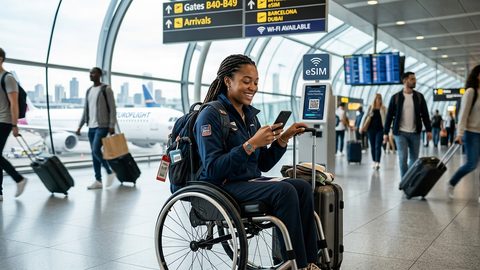 Mobile Data Planning for Wheelchair Users Traveling Abroad With eSIM
Plan mobile data for wheelchair travel abroad, with eSIM setup checks, lift outage updates, transport contacts, repair planning, and offline backups.
Mobile Data Planning for Wheelchair Users Traveling Abroad With eSIM
Plan mobile data for wheelchair travel abroad, with eSIM setup checks, lift outage updates, transport contacts, repair planning, and offline backups.