Declaring a Disability on Your London Travel Insurance
What London travel insurance with a pre-existing condition actually covers, from emergency treatment at St Thomas' to wheelchair damage and trip cancellation.

Declaring a Disability on Your London Travel Insurance
You need travel insurance that covers your specific condition. Not a generic policy. A generic policy will void your cover the moment you file a claim. The UK insurance market screens pre-existing conditions at point of purchase. If you fail to declare any change in your health between booking and departure, the policy is voidable from inception. Every claim gets denied. You get no refund of the premium. That is the Financial Ombudsman Service precedent.
Declare any condition, symptom, investigation, or medication change that a prudent underwriter would consider when setting terms, as defined by the Insurance Act 2015. This includes conditions you consider minor, stable, or under control. Non-disclosure is the single most common reason claims fail. Do not assume your condition is too small to mention. Declare it.
The GHIC and EHIC cards, both valid for five years from the date of issue by the NHS Business Services Authority, cover you for state-provided emergency care in EU member states and a few additional countries. They do not cover private healthcare, repatriation to the UK, or non-urgent treatment where you travelled specifically to receive it. Crucially, they do not cover costs arising from pre-existing conditions if the purpose of travel was to obtain treatment for that condition. For a London trip with a pre-existing condition, a GHIC or EHIC is not sufficient. You need a private travel insurance policy that specifically covers your declared conditions.
What Gets Covered: Emergency Medical, Equipment, and Cancellation
UK travel insurance policies distinguish between three separate categories of cover for pre-existing conditions: emergency treatment while you are in London, loss or damage to mobility equipment, and cancellation if your condition flares before departure. You need to understand the limits in each category. They vary drastically between mainstream and specialist providers.
Emergency Treatment And Getting Home
A standard single-trip policy offers between £1,000,000 and £10,000,000 in repatriation cover. A specialist policy can go up to £15,000,000. Without insurance, repatriation from Europe by air ambulance costs between £25,000 and £85,000, varying by distance, clinical need, and escort requirements. From North America, the cost is £50,000 to £150,000. These numbers are not theoretical. You need cover that reaches into the millions.
London hospitals are among the most advanced in the world, but the NHS system means you will be treated in the state sector unless you have private insurance that covers private facilities. Contact your policy's emergency assistance line before you incur any inpatient treatment, surgery, or repatriation costs. Ask three specific questions: "Am I covered for [specific procedure] at [named facility] under my policy number [X], and what is the pre-authorisation reference number?", "Does my policy require you to pay the facility directly, or do I pay and claim reimbursement?", and "What is the maximum amount authorised for this treatment?" Get the reference number. Write it down. Keep it with your documents.
Repatriation clauses in your policy will consider catchment area. If your condition requires a specific London hospital with a specialist unit not available elsewhere, the provider may need to authorise treatment at that facility before repatriation is considered. The decision to repatriate is clinical, not financial, but the insurer's team makes the call. If they judge you can be treated safely in a London hospital, they may refuse repatriation. If they judge you need to return to a UK hospital that has your specialist team, they will arrange it. Pre-authorisation is mandatory either way.
Mobility Equipment Cover: What Standard Policies Miss
Standard policies cap mobility equipment cover at £300 to £500 per item, with a single article limit of £250 to £300. A powered wheelchair replacement cost ranges from £2,000 to £25,000, depending on model, seating system, and customisation. A standard policy covers, at best, about 10 percent of the replacement value. Specialist policies offer between £2,000 and £5,000 per item, depending on the provider and premium tier. You need a specialist policy if your equipment is worth more than £500.
Loss or damage to mobility equipment is covered only if you have declared the equipment at purchase. Declare the make, model, serial number, and replacement value. Keep receipts and photographs. A standard policy will pay out far below replacement cost. You cannot argue your way to a higher payout after the fact.
Cancellation Cover If Your Condition Flares Before Departure
If your condition flares before your London trip, cancellation cover reimburses you for non-refundable deposits, flights, and hotel bookings. The provider will require evidence from your treating doctor. The flare must be an unexpected deterioration of a declared condition. A planned procedure or an elective surgery is not covered. If you have not declared the condition at purchase, the cancellation claim is denied outright.
Getting Around London: Step-Free Access and Equipment Limits
London Underground has 272 stations. Only 92 have step-free access from street to platform and from platform to train where level boarding is provided, according to Transport for London data from August 2026. That figure changes slowly as stations are retrofitted. Plan your route station by station.
Check Access Before Every Journey
Every station has at least one hearing loop at a ticket office or information point, as of TfL's 2026 data. Before you travel, check the TfL website live status page for station lift outages. Planned maintenance is published seven days ahead. On the day, call TfL and ask: "Is the lift from [entrance name] to [platform/direction] currently in service, and what are its dimensions?", "Is the step-free route from street to [line/direction] platform fully open today, including any connecting passageways?", and "Is the hearing loop at [ticket hall/help point] operational, and which counter position is it at?" Write down the answers and the operator's name.
The failure case: a lift is out of service, you are at a Tube station with only stairs, and it is 1am. You cannot wait for a replacement lift. You need a backup plan. Pre-load a black cab app or know which bus routes run near your destination. Every station step-free route failure means you are on the surface, not underground. Budget for the taxi cost. A black cab from central London to a Zone 2 destination can run £15 to £30. Keep cash or a card registered for payment.
The single thing that goes wrong most often here is not a medical emergency. It is assuming a station has step-free access when it does not, or assuming a lift will be working when you arrive. Check the TfL live status page the morning of each day you travel. Do it every day, not just once before your trip.
Wheelchair And Scooter Dimensions Matter
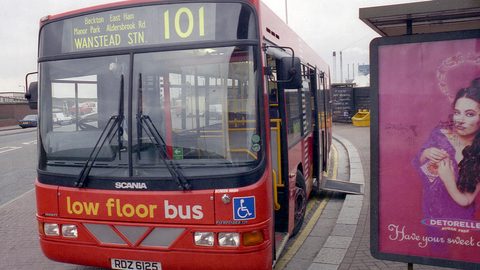
If you have a powered wheelchair or scooter, the weight and dimensions matter at every stage. A standard black cab can accommodate a folded wheelchair, but not all models fit. A London bus has a designated wheelchair space, but only one per bus, and the ramp must be deployed. If the space is taken by another user or a pushchair, you wait for the next bus. No guarantee of immediate boarding. Plan a 15 minute buffer for any bus journey where you need the wheelchair space.

| Cover Type | Standard Policy Limits | Specialist Policy Limits |
|---|---|---|
| Medical repatriation | £1,000,000 to £10,000,000 | £2,000,000 to £15,000,000 |
| Mobility equipment per item | £300 to £500 (single article limit £250 to £300) | £2,000 to £5,000 |
| Cancellation for pre-existing condition flare | Declined if condition not declared, may be excluded if declared | Covered with medical evidence of unexpected deterioration |
| Premium range single trip Europe | £20 to £80 (no pre-existing conditions) | £40 to £300 (with declared stable pre-existing conditions) |
| Premium range single trip worldwide excl USA | £50 to £200 (no pre-existing conditions) | £80 to £600 (with declared stable pre-existing conditions) |
How to Buy: the Practical Steps
Buy your policy as soon as you book your travel, not the week before departure. If your health changes between purchase and travel, you must report the change. Failure to do so voids the policy. Use a comparison site to get a baseline, then go to a specialist provider for a direct quote with the exact same parameters. Declare every condition identically across every quote. The cheapest policy with a £250 medical excess is not a bargain if you need to file a claim.
Check The Excess Per Section
Medical excess is often £50 to £250 higher than baggage excess. If you have multiple claims on one trip, you pay the excess for each section separately. A £250 medical excess on a £5,000 claim is acceptable. A £250 medical excess on a £500 claim is not. If your policy has a low medical excess, it will have a higher premium. Decide which trade off suits your budget.
Established Versus New Conditions
Read the wording. Some policies cover only conditions that have been stable for a defined period, usually 6 to 12 months. If your condition was diagnosed last month, you may not be covered for it until after the stability period ends. If you are between diagnosis and the start of a treatment plan, many providers will decline cover entirely. Specialist firms are more likely to accept you, but expect a higher premium.
When A Claim Is Denied
If your claim is denied, you can complain to the Financial Ombudsman Service. The service is free for complainants and its decisions are binding on insurers up to an award limit of £430,000 as of April 2026. You must have first exhausted the provider's internal complaints process. Keep all correspondence, pre-authorisation reference numbers, and medical records.
Who Travel Insurance with Pre-Existing Conditions Suits and Who it Does Not
Travel insurance with a declared, stable pre-existing condition suits you if you are willing to pay £40 to £600 for a single trip policy or £150 to £1,500 for an annual policy from a specialist provider. You check station access and lift status every day of your trip. You carry a pre-authorisation contact card with the three questions written on it. You budget for a taxi when the Tube lift is down.
Travel insurance with a pre-existing condition does not suit you if you expect a mainstream provider to cover your condition for the same price as a healthy traveller's policy. It does not suit you if you plan to skip declaring a condition because you think it is minor. It does not suit you if you want to rely on a GHIC or EHIC alone. The single thing that goes wrong most often is the thing you thought you could ignore. Declare it.
Read next
-
 Accessible Hotels in London Chains Boroughs and the Questions to Ask
Which London hotels offer genuine wet rooms and turning space rather than just a grab bar, and the questions to ask before you book.
Accessible Hotels in London Chains Boroughs and the Questions to Ask
Which London hotels offer genuine wet rooms and turning space rather than just a grab bar, and the questions to ask before you book.
-
 Getting Around London for Disabled Travellers Buses Lifts and the Gaps
A practical look at accessible transport in London covering bus ramps, Tube lift gaps, and the reality of step-free stations for wheelchair users.
Getting Around London for Disabled Travellers Buses Lifts and the Gaps
A practical look at accessible transport in London covering bus ramps, Tube lift gaps, and the reality of step-free stations for wheelchair users.
-
 London Museums and Attractions with Free Carer Entry and Step-Free Access
Which London museums and attractions offer free carer entry, what proof you need, and the pre-booking steps that catch out spontaneous visitors.
London Museums and Attractions with Free Carer Entry and Step-Free Access
Which London museums and attractions offer free carer entry, what proof you need, and the pre-booking steps that catch out spontaneous visitors.
-
 Which Cities Are Genuinely Accessible Ranked by What Actually Matters
A candid ranking of accessible cities worldwide based on transport, terrain, hotels and the real experience of getting around in a wheelchair.
Which Cities Are Genuinely Accessible Ranked by What Actually Matters
A candid ranking of accessible cities worldwide based on transport, terrain, hotels and the real experience of getting around in a wheelchair.
-
 What Accessible Actually Means and Why Step-Free Is Not the Same Thing
Step-free is a measurement, accessible is a promise, and wheelchair friendly is often just optimism. Here is how to tell them apart.
What Accessible Actually Means and Why Step-Free Is Not the Same Thing
Step-free is a measurement, accessible is a promise, and wheelchair friendly is often just optimism. Here is how to tell them apart.
-
 Flying to London with a Wheelchair Your Rights and the Process
How flying with a wheelchair to London actually works, from Heathrow assistance to your legal rights if the airline damages your mobility equipment.
Flying to London with a Wheelchair Your Rights and the Process
How flying with a wheelchair to London actually works, from Heathrow assistance to your legal rights if the airline damages your mobility equipment.
-
 Booking an Accessible Hotel Room in London Questions That Get Real Answers
The exact questions to ask London hotels about accessible rooms, from roll-in shower dimensions to evacuation plans, so you book a room that actually works.
Booking an Accessible Hotel Room in London Questions That Get Real Answers
The exact questions to ask London hotels about accessible rooms, from roll-in shower dimensions to evacuation plans, so you book a room that actually works.
-
 London Accessible Transport Trains Buses Taxis and the Tricky Bits Between
London accessible transport beyond the step-free Tube map: the platform gaps, bus bay conflicts, and kerb problems no journey planner mentions.
London Accessible Transport Trains Buses Taxis and the Tricky Bits Between
London accessible transport beyond the step-free Tube map: the platform gaps, bus bay conflicts, and kerb problems no journey planner mentions.
-
 Mobile Data Planning for Wheelchair Users Traveling Abroad With eSIM
Plan mobile data for wheelchair travel abroad, with eSIM setup checks, lift outage updates, transport contacts, repair planning, and offline backups.
Mobile Data Planning for Wheelchair Users Traveling Abroad With eSIM
Plan mobile data for wheelchair travel abroad, with eSIM setup checks, lift outage updates, transport contacts, repair planning, and offline backups.