How to Book a Genuinely Accessible London Hotel Room
The exact questions to ask London hotels about accessible rooms, from roll-in shower dimensions to evacuation plans, so you book a room that actually works.
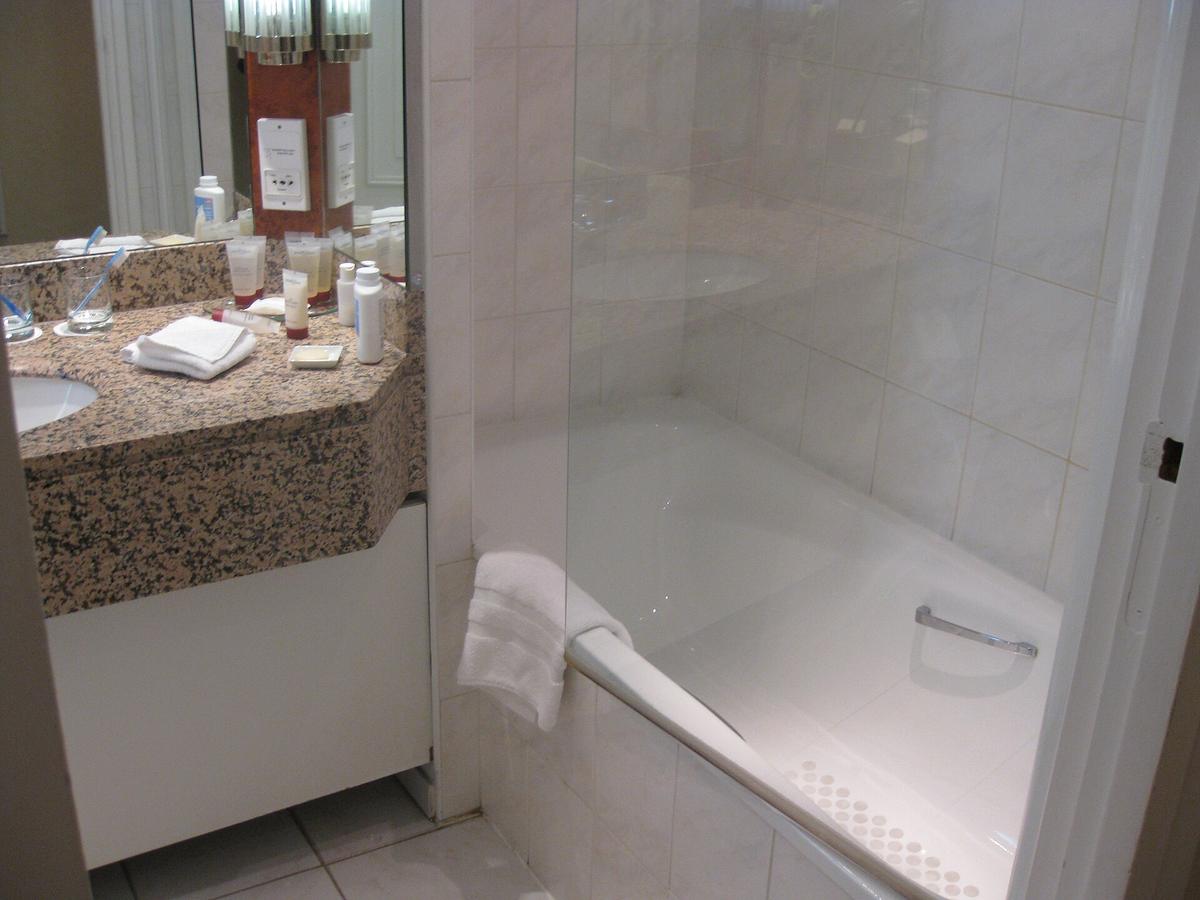

How to Book a Genuinely Accessible London Hotel Room
Most travellers think an "accessible room" filter on Booking.com, Expedia, or Hotels.com is a reliable shortcut. It is not. A 2019 audit by Martyn Sibley for Disability Horizons found that 40% of rooms booked through platform filters did not meet the stated access needs on arrival. The problem is that every platform feeds on self-declared data from the hotel. No one inspects. No one measures. The filter returns any room whose description contains the word "accessible," regardless of whether the door width hits 775 mm or the shower has a lip you cannot cross.
Your real problem is not finding a hotel that says it has an accessible room. It is confirming that the room works for you before you hand over your card details. London makes this harder than most cities because thousands of its hotels sit inside listed buildings where planning laws forbid structural changes. A Georgian townhouse in Bloomsbury can advertise an "accessible ground-floor room" and mean a bedroom with a narrow door and a lavatory two steps down to the breakfast room. The word alone proves nothing.
What does prove it is a written confirmation from the hotel that answers seven specific points. The booking process needs a script, the numbers behind each query, and a protocol to follow when the room at check-in does not match what was promised.
The Seven Questions That Replace the Filter
Door Widths and Swing Direction
Call the hotel directly. Do not use the messaging system on the booking platform. You need a human who can walk to the room and measure. Ask for the duty manager or the person who handles accessible bookings. Then ask these points in this order and write down every answer in millimetres and centimetres as they say them.
First: "What is the clear door width of the bedroom door in millimetres?" The legal minimum for new-build hotel bedrooms under Building Regulations Approved Document M, Volume 2 (2015) is 800 mm clear opening. For any doorway a wheelchair must pass through, the minimum is 775 mm clear opening. If the answer is under 775 mm, the door fails the standard. Premier Inn specifies 900 mm minimum. Travelodge specifies 800 mm minimum. Motel One specifies 900 mm. A listed building room that measures below that threshold is not an accessible room. It is a room with a wide door.
Second: "What is the clear door width of the bathroom door in millimetres?" Same threshold. 775 mm minimum. But the bathroom door must also open outward or be sliding. Approved Document M is explicit: a bathroom door that opens inward traps you if you fall against it. If the answer is "inward opening," the room fails on safety, not just convenience.
Fifth: "Does the bathroom door open outward or slide, or does it open inward?" You already asked the width. Now confirm the swing direction. If it opens inward, cross the room off your list unless you have a way to open the door from a seated or fallen position on the floor.
Shower Type and Bed Height
Third: "Is the shower a roll-in shower with no lip, or a transfer shower with a seat?" A roll-in shower means level entry, no step, no lip, and a minimum clear floor area of 1500 mm x 1500 mm. A transfer shower has a seat next to the controls and requires you to move from the wheelchair onto the seat. Both can work, but they are not the same. If you need to roll in directly, a transfer shower is a barrier. Premier Inn specifies level-access wet rooms with no transfer required. Travelodge specifies wet rooms with a seat and grab rails. Motel One specifies level-access showers with a fold-down seat. Ask which type the room has. A hotel that answers "shower" without the qualifier has not thought about it.
Fourth: "What is the height of the bed from the floor to the top of the mattress in centimetres?" The UK accessible-room standard range is 450 to 600 mm. Premier Inn locks it at 480 mm. A bed that sits too high is a transfer problem. A bed that sits too low is a stand-up problem. Get the number in centimetres, not a vague "standard height."
Turning Space and Emergency Plan
Sixth: "Is there a turning circle of at least 1500 mm in the bedroom?" Approved Document M requires a 1500 mm diameter turning circle for wheelchair manoeuvrability. A room with a tight L-shape layout that measures 1200 mm at its widest point is not wheelchair accessible in practice, even if the door is wide enough.
Seventh: "What is the emergency evacuation procedure for this room?" This is the query almost nobody raises. London hotels in older buildings often lack a Personal Emergency Evacuation Plan (PEEP) for accessible rooms. Ask who helps you out, where the refuge point is, and whether the fire alarm includes visual strobes and a vibrating pillow pad. If the answer is "we would work it out on the night," you are booking a room whose emergency protocol is improvisation.
What the Photographs and the Written Confirmation Actually Prove
Photos Lie Unless You Pin Them Down
Hotel website photographs are the most reliable source, but only if you ask one thing: "Are the photographs on your website of the specific accessible room I am booking, or a representative example?" Many hotels use a single set of photos for all accessible rooms across the property. A room on floor two may have a genuine wet room. A room on floor four may have a shower tray with a lip. The photo does not tell you which one you get.
After the call, send a follow-up email summarising the answers and ask for written confirmation that includes the room number, door widths in millimetres, shower type, bed height in centimetres, and bathroom door swing direction. Do not accept a generic "the room is suitable for guests with limited mobility." That phrase means nothing. The UK has no legal definition for it. A hotel can write that about a room with a narrow door opening and a bathtub with no grab rails.
Platform Filters Are Not Your Friend
Booking platforms offer no better protection. Expedia and Hotels.com (which share a backend) let you check boxes for roll-in shower, grab rails, and wheelchair-accessible bathroom. Those filters are self-declared by the hotel. No annual audit verifies them. The same applies to the "accessible" label on Booking.com: the filter returns any room with the word in its description, regardless of specifics. The 40% failure rate from the 2019 study has not been retested since, but nothing has changed about the underlying self-declaration model.
Three London chains run on audited specifications rather than self-declaration. Premier Inn publishes an "Accessible Room Specification" document (last revised 2023) that fixes door widths at 900 mm, bed height at 480 mm, and specifies level-access wet rooms with outward-opening bathroom doors. Travelodge publishes an "Accessible Room Information" page (updated 2024) with an 800 mm minimum door width and wet rooms with seats. Motel One publishes an "Accessibility" page (2024) with 900 mm doors and level-access showers with fold-down seats. These chains have the same room specification applied across every property. That consistency drops the arrival-day failure rate close to zero, at least on the built environment. The downside is that a Premier Inn room in Paddington offers the same box-checking predictability as a Motel One room in Tower Hill. You trade character for reliability.
What to Do When the Accessible Hotel Room Does Not Match
At the Front Desk
You arrive. The door measures narrow where the email promised 900 mm. The shower has a step. Do not unpack. Do not accept a free drink. Photograph every discrepancy against the printed email you brought with you. Return to the front desk and ask for the duty manager. State the sentence exactly: "The booking was not honoured as confirmed in writing." Request either relocation to a compliant room or a full refund processed immediately.
If the hotel cannot offer a compliant room, ask for their written confirmation of the discrepancies and their agreement to refund. Then call your booking platform. The platform has a legal obligation under UK consumer law to refund booked services that are not as described, but you need the hotel's written admission to make that stick.
Independent Hotels and Cross-Checking
This scenario is more likely in independently owned hotels than in the chains with audited specifications. No published UK-wide audit data exists for independent hotels with self-declared accessible rooms, so you are flying on their word. The AccessAble website, which surveys over 1,000 London venues including hotels, provides an alternative information source. Each AccessAble guide shows a "Last surveyed" date at the top and includes on-site measurements for door widths, bed heights, shower types, grab-rail positions, and turning spaces. If an independent hotel appears on AccessAble with a survey date within the last three years, that data is more reliable than what the hotel tells you on the phone. Use it as a cross-check.

(Gerald_Ford_Library).jpg)
Getting to and Around London by Accessible Transport
Your hotel room is useless if you cannot reach it. For Tube travel, use the Transport for London step-free Tube guide, updated quarterly with the next update expected September 2026. The definition matters: step-free means step-free from street to platform, but step-free from street to train depends on the station and the line. Some stations have platform-level boarding. Others require a manual ramp from staff. Check the real-time lift status at tfl.gov.uk/status-updates before you leave the hotel, because a lift marked out-of-service turns a step-free station into a station your wheelchair cannot enter.
For National Rail, use the "Stations made easy" tool at nationalrail.co.uk. It provides step-free routes, ramp gradients, staff assistance hours, and accessible toilet locations for every station. The data updates when the station layout changes, which in London means it is accurate for major stations like King's Cross and Paddington but may lag behind for smaller suburban stations.
The Honest Caveat
The 40% failure rate from the 2019 Disability Horizons study is the only published audit of its kind for London. It is seven years old. The self-declaration model that caused it has not changed. Booking platforms have added no verification layer. Hotel staff turnover means the person who answers your call today may not be the person who checks you in tomorrow. The hotel chains with audited specifications remove most of the guesswork, but they limit your location and your budget. The independent hotels with listed-building constraints and genuine accessible rooms exist, but they are the minority and they require the full seven-point script to find. There is no app, no filter, and no shortcut that replaces picking up the phone and asking for millimetres.
Read next
-
 Accessible Hotels in London Chains Boroughs and the Questions to Ask
Which London hotels offer genuine wet rooms and turning space rather than just a grab bar, and the questions to ask before you book.
Accessible Hotels in London Chains Boroughs and the Questions to Ask
Which London hotels offer genuine wet rooms and turning space rather than just a grab bar, and the questions to ask before you book.
-
 Getting Around London for Disabled Travellers Buses Lifts and the Gaps
A practical look at accessible transport in London covering bus ramps, Tube lift gaps, and the reality of step-free stations for wheelchair users.
Getting Around London for Disabled Travellers Buses Lifts and the Gaps
A practical look at accessible transport in London covering bus ramps, Tube lift gaps, and the reality of step-free stations for wheelchair users.
-
 London Museums and Attractions with Free Carer Entry and Step-Free Access
Which London museums and attractions offer free carer entry, what proof you need, and the pre-booking steps that catch out spontaneous visitors.
London Museums and Attractions with Free Carer Entry and Step-Free Access
Which London museums and attractions offer free carer entry, what proof you need, and the pre-booking steps that catch out spontaneous visitors.
-
 Which Cities Are Genuinely Accessible Ranked by What Actually Matters
A candid ranking of accessible cities worldwide based on transport, terrain, hotels and the real experience of getting around in a wheelchair.
Which Cities Are Genuinely Accessible Ranked by What Actually Matters
A candid ranking of accessible cities worldwide based on transport, terrain, hotels and the real experience of getting around in a wheelchair.
-
 What Accessible Actually Means and Why Step-Free Is Not the Same Thing
Step-free is a measurement, accessible is a promise, and wheelchair friendly is often just optimism. Here is how to tell them apart.
What Accessible Actually Means and Why Step-Free Is Not the Same Thing
Step-free is a measurement, accessible is a promise, and wheelchair friendly is often just optimism. Here is how to tell them apart.
-
 Flying to London with a Wheelchair Your Rights and the Process
How flying with a wheelchair to London actually works, from Heathrow assistance to your legal rights if the airline damages your mobility equipment.
Flying to London with a Wheelchair Your Rights and the Process
How flying with a wheelchair to London actually works, from Heathrow assistance to your legal rights if the airline damages your mobility equipment.
-
 London Accessible Transport Trains Buses Taxis and the Tricky Bits Between
London accessible transport beyond the step-free Tube map: the platform gaps, bus bay conflicts, and kerb problems no journey planner mentions.
London Accessible Transport Trains Buses Taxis and the Tricky Bits Between
London accessible transport beyond the step-free Tube map: the platform gaps, bus bay conflicts, and kerb problems no journey planner mentions.
-
 London Travel Insurance with a Pre-Existing Condition What Gets Covered
What London travel insurance with a pre-existing condition actually covers, from emergency treatment at St Thomas' to wheelchair damage and trip cancellation.
London Travel Insurance with a Pre-Existing Condition What Gets Covered
What London travel insurance with a pre-existing condition actually covers, from emergency treatment at St Thomas' to wheelchair damage and trip cancellation.
-
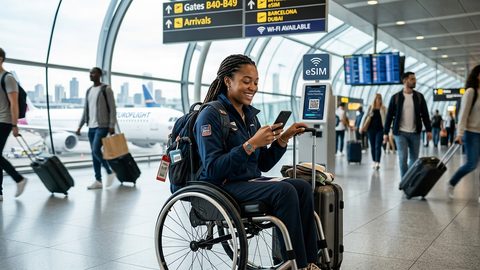 Mobile Data Planning for Wheelchair Users Traveling Abroad With eSIM
Plan mobile data for wheelchair travel abroad, with eSIM setup checks, lift outage updates, transport contacts, repair planning, and offline backups.
Mobile Data Planning for Wheelchair Users Traveling Abroad With eSIM
Plan mobile data for wheelchair travel abroad, with eSIM setup checks, lift outage updates, transport contacts, repair planning, and offline backups.