Are Accessible Cruises from London Actually Accessible
Accessible cruises from London sound ideal, but Tilbury's terminal, Thames tender ports, and Southampton transfers have caveats you need to know.
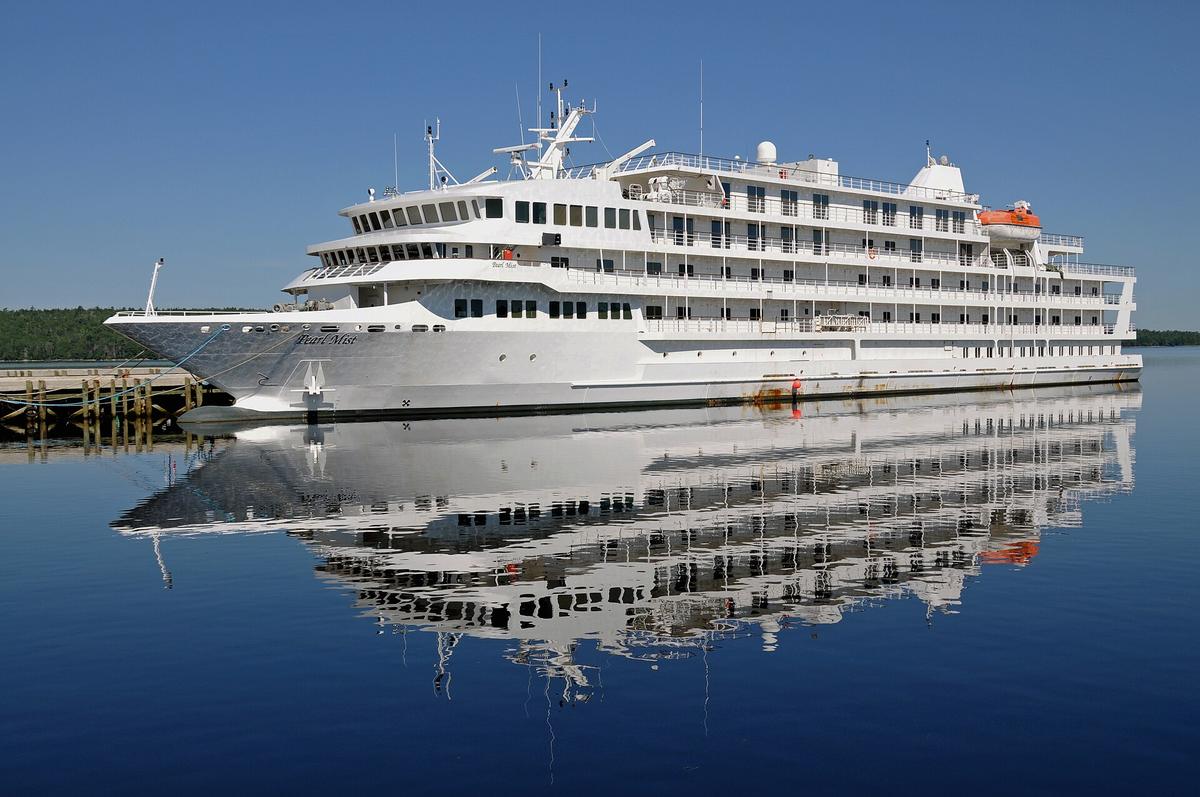

Tilbury’s Tender Ports and Southampton’s Step-Free Boarding
You have boarded your accessible cruise from London. The accessible cabin is exactly as promised: 81 centimetres of clear door width, a roll-in shower, grab bars where your hand expects them. You have one bag to unpack and seven days of not moving hotels. Then someone mentions the tender port. That is the moment the brochure promise meets the pier.
The appeal of an accessible cruise from London is obvious. One cabin. One unpacking. A predictable layout you can memorise in an hour. Consistent facilities from breakfast to bedtime. For a wheelchair user, the numbers look good: accessible cabin inventory on large newbuilds between 2020 and 2025 runs 0.5% to 2% of total cabins, according to the industry's annual data. But those cabins sell out 12 to 18 months ahead for peak itineraries. And the real test is not the cabin. The real test is what happens when the ship cannot dock.
Two departure points serve London cruises: Tilbury and Southampton, plus the Thames itself for river vessels. Each has a different accessibility profile. Each fails in a different way. Knowing which failure to plan for—and which ones to avoid entirely—makes the difference between a holiday and an ordeal.
Tilbury: Older Terminal, No Dock for Big Ships
Tilbury Cruise Terminal sits in a working port with infrastructure that dates from an era before accessibility regulation existed. The terminal itself has ramped access, but the walk from the terminal building to the ship can be long and exposed to weather. The real problem is that Tilbury primarily serves river cruise vessels and small expedition ships. Many of these ships use gangways with a slope that exceeds the 1:12 gradient recommended for independent wheelchair ascent. You will need a companion to push up the ramp or you will need to request crew assistance at check-in.
Book a Tilbury departure only if your mobility is good enough to manage a steep gangway with help. For a power chair user, Tilbury is a poor choice. The terminal has no passenger lift to the boarding level at some berths, and the port authority has not published a terminal access statement that addresses these specific constraints. If you are looking at a specific sailing, call the cruise line's access department with one question: what is the measured gradient of the gangway at Tilbury on the day of your sailing, and does the terminal have a fixed walkway or a mobile ramp?
Southampton: the Accessible Route That Still Needs Planning
Southampton is the departure point for almost every major cruise line sailing from England. Getting from central London to the port is the first challenge. You have three options and none of them is simple.
Accessible Coach Transfer
National Express runs coaches from London Victoria to the port. The coaches have one wheelchair space per vehicle. Your wheelchair must fit within 120 centimetres long, 70 centimetres wide and 135 centimetres high. The total weight limit including the occupant is 300 kilograms. The coach ramp angle runs between 12 and 15 degrees. That is within the usable range for most manual chair users but can be steep for a power chair with a rearward centre of gravity. Book your space at least 48 hours ahead and confirm the ramp angle by phone. The alternative is the accessible taxi, but a wheelchair accessible vehicle from London to the south coast costs significantly more than the coach and must be pre-booked with a private hire operator that specifies ramp angle.
Accessible Rail
London Waterloo has step free access to all platforms. Southampton Central station completed a major refit in 2022 that left it step free to all platforms via lifts. You must book Passenger Assist at least two hours ahead through National Rail. The phone number is 0800 022 3720. Ramp boarding is provided by station staff. The journey takes roughly 80 minutes. From the station to the cruise terminal you need a taxi. Southampton's cruise terminals are not within practical wheelchair rolling distance of the station. Pre-book a WAV from the station to the terminal. The port authority's 2023 access statement confirms step free entry, accessible toilets, and a hearing loop at the check in desk, but does not guarantee the availability of accessible taxis on arrival.
What Happens at the Terminal
Southampton's newer terminals, such as City Cruise Terminal and Mayflower Cruise Terminal, have automatic doors, level boarding bridges, and accessible check in counters. The older Queen Elizabeth II Terminal is less consistent. If your sailing departs from QEII Terminal, expect a longer walk from check in to security and a boarding bridge that may not align perfectly with the ship's door. Ask the cruise line which terminal you will use at the time of booking. If they cannot answer, consider a different sailing.
The Thames: Tenders, Tides, and the Reality of River Cruising
Thames river cruises departing from central London piers face a set of constraints that ocean cruises do not. The Thames is tidal, so the gangway angle changes with the hour. At low tide, the slope can be too steep for independent wheelchair boarding. Some river cruise vessels use a floating pontoon that rises and falls with the tide, but the ramp from the pontoon to the shore is fixed. You need to check the sailing time against the tide tables.
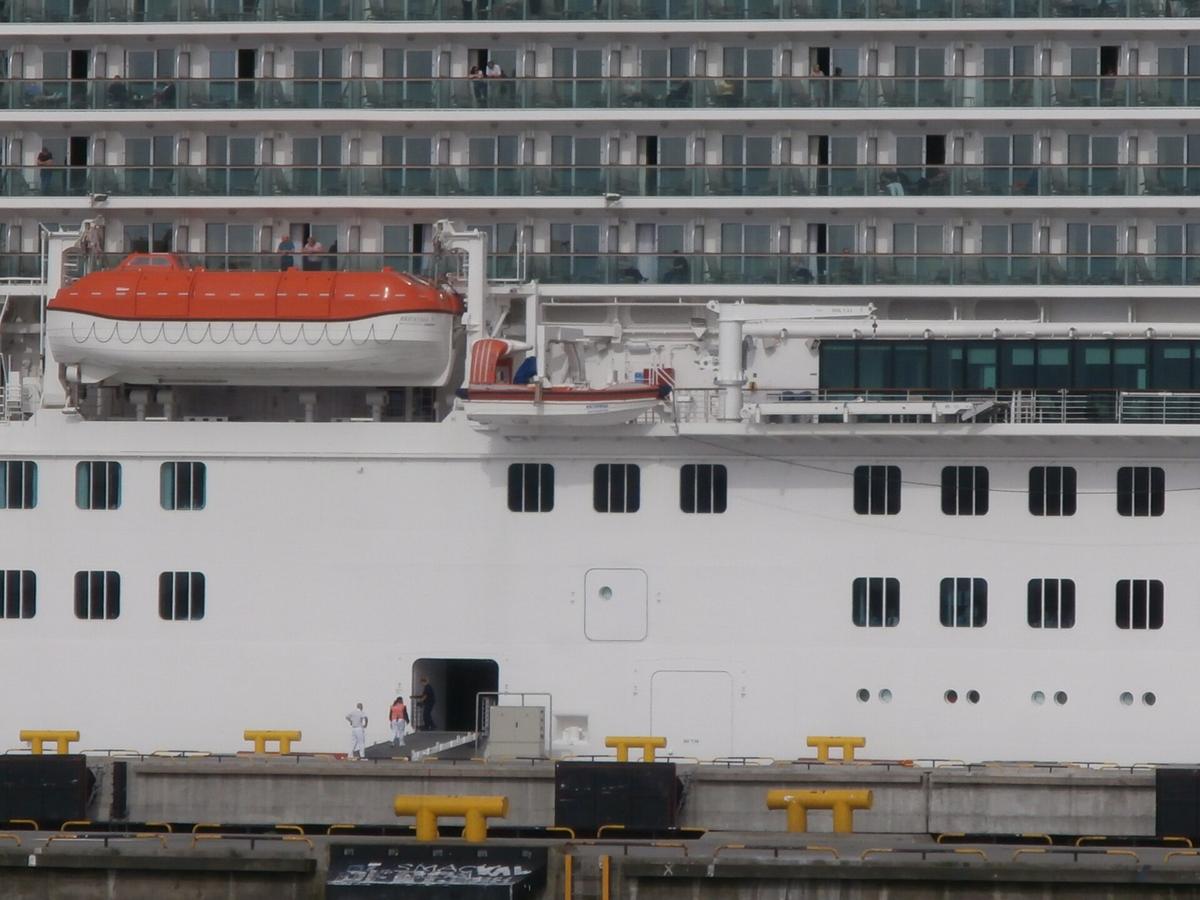
The more serious limitation is the tender port. On a Thames river cruise, some scheduled stops are at piers without docks. The ship anchors offshore and passengers transfer to a small tender boat. Wheelchair users cannot board these tenders. Even when a tender lift is available, the lift capacity is 136 kilograms. A power chair plus the occupant can exceed that limit. The transfer is permitted only in calm seas and only at the master's discretion. That means a port advertised on the itinerary can become a port you watch from the ship deck.
Before you book any Thames cruise, ask the cruise line's access department two questions. First, which ports on this specific sailing are tender ports. Second, does this ship have a tender lift rated for my wheelchair's combined weight. Get the answer in writing.
The Accessible Cabin: Held or Not Held
The accessible cabin itself is the least of your worries on a newbuild ship. ADA compliance for US flag ships and EU regulation 1177/2010 for ships departing EU ports require wider doorways of minimum 81 centimetres, roll in showers, grab bars, lowered sinks, and emergency strobe lights. On ships built after 2020, these cabins are genuinely usable. The problem is booking one.
US law requires airlines and cruise lines to hold accessible cabins for disabled passengers until general inventory sells out. The EU has no equivalent regulation. EU regulation 1177/2010, published in 2010 and in force since 2012, does not mandate a hold back period. The UK retained this regulation after Brexit under the Merchant Shipping Order of 2019, so the same gap applies to London departures. A travel agent or a cruise line booking system can sell the accessible cabin to a non disabled passenger the day the itinerary opens. By the time you call, the cabin may be gone even though the sailing is not sold out.
You can mitigate this by booking through a specialist agency that works with cruise line access departments directly. Accessible Travel Solutions publishes an annual cruise accessibility audit that rates cabin design, tender policy, excursion availability and crew training. Sage Traveling publishes ship by ship reviews with dated cabin measurements and tender port notes. Use both before you book. Ask the access department for the exact clear door width measured between door stops, not the frame. A cabin that is technically accessible on paper may have a turning radius too tight for your chair.

| Question | Why It Matters |
|---|---|
| Is the excursion vehicle lift equipped or ramp equipped? | A lift handles power chairs better than a ramp. |
| What is the maximum doorway width on the vehicle? | Your chair must fit through the door, not just in the hold. |
| What is the interior turning radius? | A tight interior means you stay on the bus at the scenic stop. |
| Is the tour operator a cruise line partner or a third party? | Cruise line partners are more likely to have vetted accessibility. |
| What is the cancellation policy if the tender cannot land? | You need a refund, not a credit. |
Shore Excursions: the Access That Ends at the Pier
Your accessible cabin is reliable. The ship's medical centre on a CLIA member line has at least one physician and one nurse, and on large post 2020 ships may have a defibrillator, ventilator and X ray. Some ships even offer dialysis through a third party provider like Dialysis at Sea, though you must pre book 45 to 90 days ahead. But none of that matters if the shore excursion is inaccessible.
Royal Caribbean runs an Accessible Shore Excursions programme. Carnival has an accessible excursions filter on its booking site. Holland America notes accessibility per port. Celebrity takes bookings through its Access Department. Each of these programmes is a starting point, not a guarantee. The excursion vehicle may be lift equipped or ramp equipped. The difference matters. A ramp is cheaper for the operator but harder for a power chair user. Ask the four questions from the table above for every excursion you book.
For cruises that stop at Greenwich or Tower piers on the Thames, the shore excursion is a walking tour of historic sites. These sites have cobblestones, uneven pavements and steps. The cruise line's accessible excursion may be a bus tour that drives past the sites rather than visiting them. If your goal is to see the Cutty Sark or the Tower of London from your wheelchair, book those attractions independently. The cruise line excursion will not serve you better.
Read next
-
 Accessible Hotels in London Chains Boroughs and the Questions to Ask
Which London hotels offer genuine wet rooms and turning space rather than just a grab bar, and the questions to ask before you book.
Accessible Hotels in London Chains Boroughs and the Questions to Ask
Which London hotels offer genuine wet rooms and turning space rather than just a grab bar, and the questions to ask before you book.
-
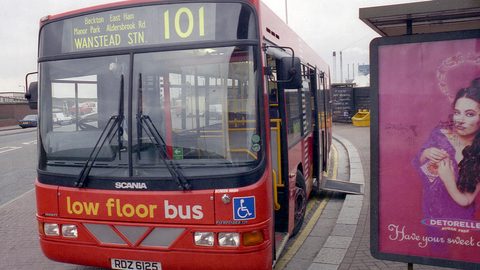 Getting Around London for Disabled Travellers Buses Lifts and the Gaps
A practical look at accessible transport in London covering bus ramps, Tube lift gaps, and the reality of step-free stations for wheelchair users.
Getting Around London for Disabled Travellers Buses Lifts and the Gaps
A practical look at accessible transport in London covering bus ramps, Tube lift gaps, and the reality of step-free stations for wheelchair users.
-
 London Museums and Attractions with Free Carer Entry and Step-Free Access
Which London museums and attractions offer free carer entry, what proof you need, and the pre-booking steps that catch out spontaneous visitors.
London Museums and Attractions with Free Carer Entry and Step-Free Access
Which London museums and attractions offer free carer entry, what proof you need, and the pre-booking steps that catch out spontaneous visitors.
-
 Which Cities Are Genuinely Accessible Ranked by What Actually Matters
A candid ranking of accessible cities worldwide based on transport, terrain, hotels and the real experience of getting around in a wheelchair.
Which Cities Are Genuinely Accessible Ranked by What Actually Matters
A candid ranking of accessible cities worldwide based on transport, terrain, hotels and the real experience of getting around in a wheelchair.
-
 What Accessible Actually Means and Why Step-Free Is Not the Same Thing
Step-free is a measurement, accessible is a promise, and wheelchair friendly is often just optimism. Here is how to tell them apart.
What Accessible Actually Means and Why Step-Free Is Not the Same Thing
Step-free is a measurement, accessible is a promise, and wheelchair friendly is often just optimism. Here is how to tell them apart.
-
 Flying to London with a Wheelchair Your Rights and the Process
How flying with a wheelchair to London actually works, from Heathrow assistance to your legal rights if the airline damages your mobility equipment.
Flying to London with a Wheelchair Your Rights and the Process
How flying with a wheelchair to London actually works, from Heathrow assistance to your legal rights if the airline damages your mobility equipment.
-
 Booking an Accessible Hotel Room in London Questions That Get Real Answers
The exact questions to ask London hotels about accessible rooms, from roll-in shower dimensions to evacuation plans, so you book a room that actually works.
Booking an Accessible Hotel Room in London Questions That Get Real Answers
The exact questions to ask London hotels about accessible rooms, from roll-in shower dimensions to evacuation plans, so you book a room that actually works.
-
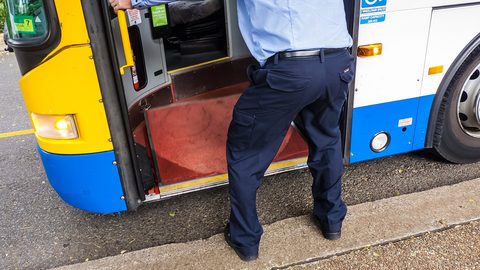 London Accessible Transport Trains Buses Taxis and the Tricky Bits Between
London accessible transport beyond the step-free Tube map: the platform gaps, bus bay conflicts, and kerb problems no journey planner mentions.
London Accessible Transport Trains Buses Taxis and the Tricky Bits Between
London accessible transport beyond the step-free Tube map: the platform gaps, bus bay conflicts, and kerb problems no journey planner mentions.
-
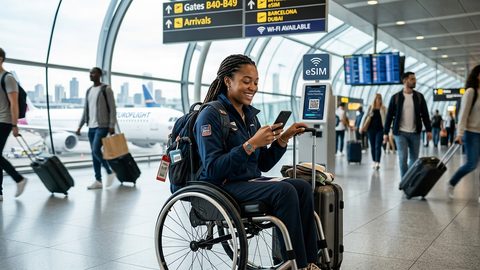 Mobile Data Planning for Wheelchair Users Traveling Abroad With eSIM
Plan mobile data for wheelchair travel abroad, with eSIM setup checks, lift outage updates, transport contacts, repair planning, and offline backups.
Mobile Data Planning for Wheelchair Users Traveling Abroad With eSIM
Plan mobile data for wheelchair travel abroad, with eSIM setup checks, lift outage updates, transport contacts, repair planning, and offline backups.