London for Visitors with Invisible Disabilities and Sensory Needs
How London's Sunflower lanyard programme works in practice, plus where to find quiet rooms, sensory maps, and relaxed performances across the city.


How the Sunflower Lanyard Actually Works in London—and Where to Find Quiet Spaces
The Sunflower lanyard works at Heathrow because the airport trained its staff to recognise it. It does not work at a corner shop in Soho, and it will not get you to the front of a queue at the London Eye. Your job as a visitor is to know exactly where the scheme is active, where the quiet rooms are, and what to do when the famous option is the wrong one. London has embraced invisible disability access more than most cities, but recognition is inconsistent. The practical strategy is to stick to the places that have publicly committed.
The Hidden Disabilities Sunflower scheme launched in 2016 and is run by Hidden Disabilities Sunflower Scheme Limited. The lanyard is free. The benefit is that staff at participating venues have been trained to recognise the wearer may need extra time, patience, or help. There is no guaranteed queue skip or discount. Collect the lanyard at the airport or order it before you travel. London's participating museums, theatres, and quiet spaces are mapped out below—along with exactly where to pick up a lanyard and where to sit down when your body needs a break.
Start at the Airport: Lanyard Collection and Quiet Spaces
Collecting Your Lanyard and Finding the Quiet Rooms
Land at Heathrow and you can collect a free Sunflower lanyard at the assistance desks in all five terminals. You can pre-book or walk up. Heathrow has quiet rooms in Terminal 2 (near gates A16-A26), Terminal 3 (near Gate 24), Terminal 4 (near Gate 1A), and Terminal 5 (near Gate A23). The only sensory room is in Terminal 3 near Gate 24, opened in 2024. If you need to familiarise yourself with the airport layout before you travel, download the Heathrow Access Guide from the airport website. It is a step-by-step photo guide for each terminal, last updated in 2025.
At Gatwick, collect the lanyard from the assistance desks in both terminals. The quiet rooms are in the North Terminal near Gate 55 and the South Terminal near Gate 1. Sensory rooms opened in 2019 in both terminals. Download Gatwick's Autism Friendly Guide, last updated in 2024, which includes sensory maps and social stories. At Stansted, the special assistance desk in the check-in area has the lanyards. The quiet room is near Gate 1, and the sensory room opened in 2023. Download the Stansted Accessibility Guide, last updated in 2024, which includes a visual story for autistic passengers. At Luton, collect the lanyard at the special assistance desk in the terminal. The quiet room is near Gate 1, and the sensory room opened in 2024. Luton's Special Assistance page has a downloadable visual guide, last updated in 2024. At London City Airport, the information desk has the lanyards. The quiet room is on the first floor of the departure lounge. The sensory room opened in 2022. Download the London City Airport terminal navigation guide, last updated in 2024.
When the Airport System Fails
The failure case is that not every airline check-in desk recognises the lanyard, especially at budget carriers. Approach the airport assistance desk first, not the gate staff, and explain what you need. If you arrive at 1am, the assistance desks are closed and you cannot collect the lanyard. Order one before you travel from the Hidden Disabilities Sunflower Scheme website. Unlike London, Barcelona’s assistance infrastructure grew directly from its Paralympic legacy, so airport support for invisible disabilities tends to be more consistently embedded.
Transport for London: the Sunflower Works, but Plan for the Walking
Where the Lanyard Is Recognised on the Network
Transport for London has recognised the Sunflower lanyard since 2019. Staff at all London Underground and London Overground ticket offices and information points are trained to respond. All London buses have induction loops at the driver cab area. All TfL River Bus piers have induction loops at ticket offices. Guide dogs and assistance dogs are permitted on all TfL services without restriction.
The Distance Problem
But here is the number that matters for a visitor with fatigue, chronic pain, or a sensory processing condition. A moderate sightseeing day in London covers 8 to 12 kilometres on foot. The average walk between a Tube station and a museum entrance is 400 to 800 metres. That is before you walk through the museum itself.
The British Museum gallery floor area is 92,000 square metres, one of the largest single museum floors in Europe. The Natural History Museum is 65,000 square metres. The Victoria and Albert Museum is 45,000 square metres across seven floors. The Science Museum is 30,000 square metres across five floors. The Tower of London site is 4.9 hectares, with an average visit duration of two to three hours on foot. St Paul's Cathedral dome climb is 528 steps, with no lift beyond the Whispering Gallery at 257 steps. Westminster Abbey floor surface is uneven medieval stone throughout the nave and chapels.
Your Strategy: Reduce the Walk Before You Arrive
Pick one museum per day. Book a wheelchair loan at the museums that offer one. Manual wheelchairs are available free at the British Museum, National Gallery, Tate Modern, Tate Britain, Natural History Museum, Science Museum, Victoria and Albert Museum, and Tower of London. All require advance booking except the British Museum, which allows day-of subject to availability. The British Museum also loans portable stools from the information desk. Use them.


Read next
-
 Accessible Hotels in London Chains Boroughs and the Questions to Ask
Which London hotels offer genuine wet rooms and turning space rather than just a grab bar, and the questions to ask before you book.
Accessible Hotels in London Chains Boroughs and the Questions to Ask
Which London hotels offer genuine wet rooms and turning space rather than just a grab bar, and the questions to ask before you book.
-
 Getting Around London for Disabled Travellers Buses Lifts and the Gaps
A practical look at accessible transport in London covering bus ramps, Tube lift gaps, and the reality of step-free stations for wheelchair users.
Getting Around London for Disabled Travellers Buses Lifts and the Gaps
A practical look at accessible transport in London covering bus ramps, Tube lift gaps, and the reality of step-free stations for wheelchair users.
-
 London Museums and Attractions with Free Carer Entry and Step-Free Access
Which London museums and attractions offer free carer entry, what proof you need, and the pre-booking steps that catch out spontaneous visitors.
London Museums and Attractions with Free Carer Entry and Step-Free Access
Which London museums and attractions offer free carer entry, what proof you need, and the pre-booking steps that catch out spontaneous visitors.
-
 Which Cities Are Genuinely Accessible Ranked by What Actually Matters
A candid ranking of accessible cities worldwide based on transport, terrain, hotels and the real experience of getting around in a wheelchair.
Which Cities Are Genuinely Accessible Ranked by What Actually Matters
A candid ranking of accessible cities worldwide based on transport, terrain, hotels and the real experience of getting around in a wheelchair.
-
 What Accessible Actually Means and Why Step-Free Is Not the Same Thing
Step-free is a measurement, accessible is a promise, and wheelchair friendly is often just optimism. Here is how to tell them apart.
What Accessible Actually Means and Why Step-Free Is Not the Same Thing
Step-free is a measurement, accessible is a promise, and wheelchair friendly is often just optimism. Here is how to tell them apart.
-
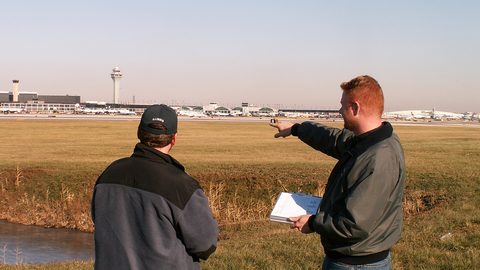 Flying to London with a Wheelchair Your Rights and the Process
How flying with a wheelchair to London actually works, from Heathrow assistance to your legal rights if the airline damages your mobility equipment.
Flying to London with a Wheelchair Your Rights and the Process
How flying with a wheelchair to London actually works, from Heathrow assistance to your legal rights if the airline damages your mobility equipment.
-
 Booking an Accessible Hotel Room in London Questions That Get Real Answers
The exact questions to ask London hotels about accessible rooms, from roll-in shower dimensions to evacuation plans, so you book a room that actually works.
Booking an Accessible Hotel Room in London Questions That Get Real Answers
The exact questions to ask London hotels about accessible rooms, from roll-in shower dimensions to evacuation plans, so you book a room that actually works.
-
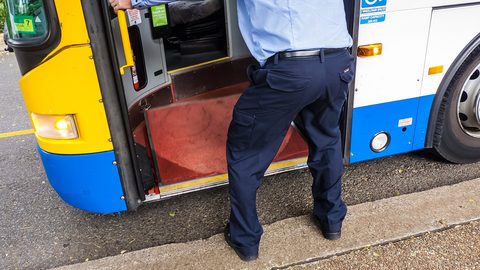 London Accessible Transport Trains Buses Taxis and the Tricky Bits Between
London accessible transport beyond the step-free Tube map: the platform gaps, bus bay conflicts, and kerb problems no journey planner mentions.
London Accessible Transport Trains Buses Taxis and the Tricky Bits Between
London accessible transport beyond the step-free Tube map: the platform gaps, bus bay conflicts, and kerb problems no journey planner mentions.
-
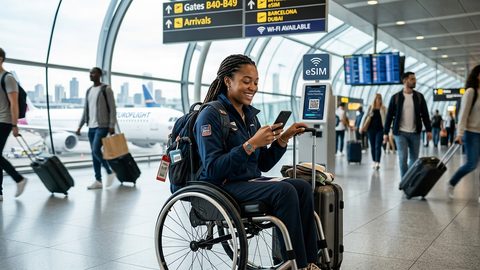 Mobile Data Planning for Wheelchair Users Traveling Abroad With eSIM
Plan mobile data for wheelchair travel abroad, with eSIM setup checks, lift outage updates, transport contacts, repair planning, and offline backups.
Mobile Data Planning for Wheelchair Users Traveling Abroad With eSIM
Plan mobile data for wheelchair travel abroad, with eSIM setup checks, lift outage updates, transport contacts, repair planning, and offline backups.