London River Bus Piers Step Free Access and Wheelchair Boarding
A practical guide to London River Bus Piers Step Free Access and Wheelchair Boarding.
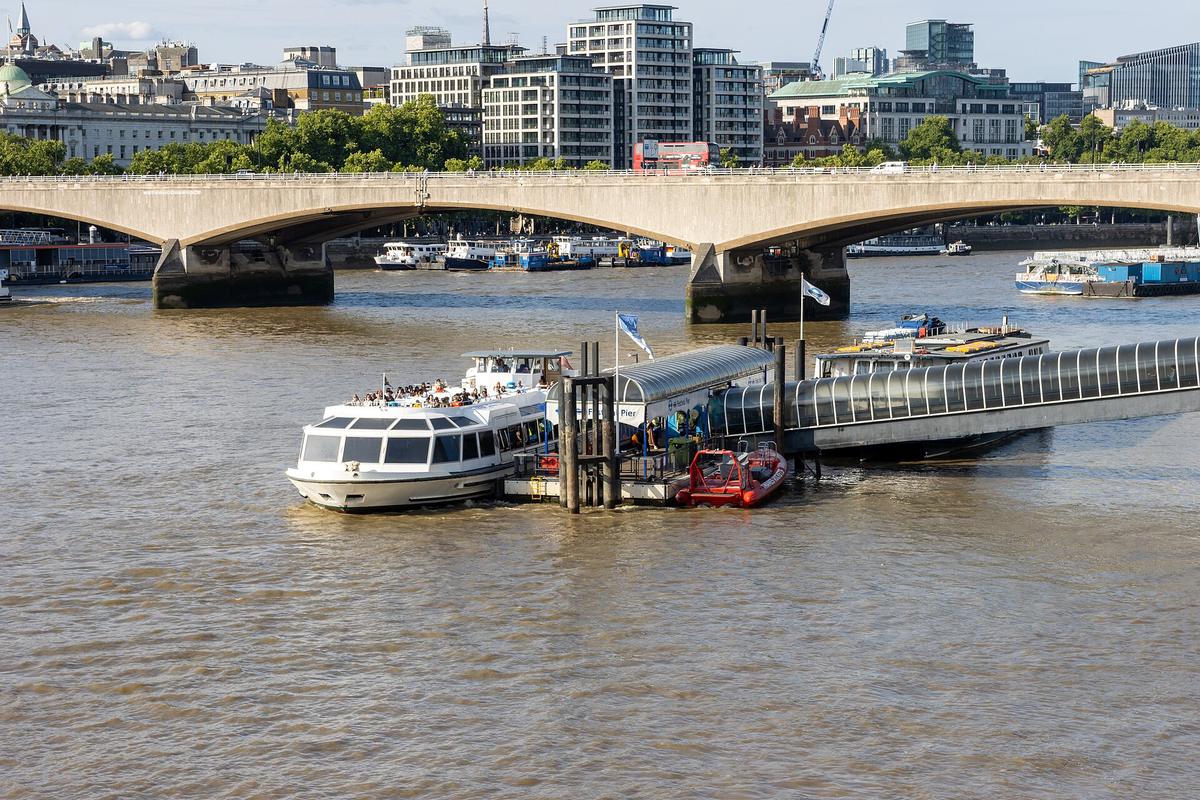

How the river bus handles wheelchair boarding
Every vessel in the Uber Boat by Thames Clippers fleet is wheelchair accessible and uses ramps to connect the boat with the pier. The crew deploys the ramp at each stop, and the process is designed to work across the tidal range that defines life on the Thames. The operator states that all boats except Star Clipper, Storm Clipper and Sky Clipper carry an accessible toilet on board, so passengers who need that facility can plan around those three named vessels if they wish.
Larger boats in the fleet can carry a maximum of four wheelchairs plus a further three folded wheelchairs. This is a fixed capacity, not a guideline, and it applies regardless of how busy the service is. If you are travelling in a group that includes several wheelchair users, factoring in that cap early will help you avoid an unexpected wait.
Piers that are not step-free and why
Of the 24 piers on the network, three are not step-free for wheelchair users: Cadogan Pier, Wandsworth Riverside Quarter Pier, and London Bridge City Pier. The limitation is not about stairs or a permanent barrier. It comes down to the brow, the gangway that links the pier to the boat. At these three locations the angle of the brow can become too steep at certain states of the tide, and the operator has assessed that the resulting slope makes boarding unsafe for wheelchair users.
This is a tidal constraint, not an oversight, and it means the status of these piers is unlikely to change with a quick fix. The operator has nominated specific alternative piers nearby. For Cadogan Pier, the suggested step-free alternative is Battersea Power Station Pier, which sits across the river. For London Bridge City Pier, the closest accessible option is Bankside Pier. For Wandsworth Riverside Quarter Pier, passengers are directed to either Putney Pier or Plantation Wharf Pier.
The 21 piers with step-free access
The remaining 21 piers on the route between Putney and Barking Riverside offer step-free access for wheelchair users. That covers the majority of the network, including high-traffic central London stops. TfL manages seven key piers on the network, among them Tower, Embankment, Westminster and Greenwich, while the other piers are privately owned. The management split does not change the accessibility status of a pier, but it is worth knowing that the body responsible for upkeep varies by location.
Because pier infrastructure is exposed to river conditions, step-free status can be interrupted by unplanned maintenance. A recent example involved Millbank Pier, which temporarily lost its step-free access while work was carried out. The operator publishes live service alerts that capture these short-term changes, and checking those alerts on the day of travel is the only reliable way to confirm that a normally accessible pier is open and step-free when you need it.
Where you can find staff assistance
Customer Service Assistants are available to help passengers at nine piers: London Eye, Westminster, Embankment, Bankside, London Bridge, Tower, Canary Wharf, Greenwich and North Greenwich. Their presence is scheduled between 10:00 and 18:00. Outside those hours, or at piers not on that list, you will still be able to board using the ramp, but you should not count on dedicated assistance beyond the crew operating the vessel.
If your journey depends on having a member of staff help with the ramp or with navigating the pier, planning travel within that 10:00 to 18:00 window at one of the nine named piers gives you the most predictable experience. The operator does not promise that staff can leave their post to assist beyond the immediate pier area, so factor that in if you need help connecting to a nearby station or street-level exit.
Mobility scooters and the recognition scheme
Mobility scooter users cannot simply turn up and board. The operator requires you to join a Mobility Scooter Recognition Scheme in advance of travel and to carry a Mobility Aid Card when you arrive at the pier. Without that card, boarding with a scooter will be refused. The scheme exists because the operator's Safety Team needs to assess whether a specific scooter model can be accommodated safely on the vessels, taking into account dimensions, turning circle and weight.
There is a useful shortcut for many passengers. TfL-issued Mobility Aid Cards are now recognised by Uber Boat by Thames Clippers. If you already hold a TfL card, you do not need to register separately with the operator's own scheme. The list of approved scooter models is subject to review by the Safety Team and may change, so if you are buying a new scooter and intend to use it on the river, checking the current approved list before purchase is a sensible precaution.
Onboard rules that affect wheelchair and scooter users
Wheelchairs and mobility scooters are not permitted on the back deck of any vessel. This restriction comes from the Maritime and Coastguard Agency, which requires escape routes to remain unrestricted. It is a safety regulation, not an operator policy, and crew members are obliged to enforce it. The front and middle sections of the boat are where you should position yourself.
Hearing loops are installed at four piers: Westminster, Embankment, Bankside and London Bridge City. Note that London Bridge City Pier appears on this list despite not being step-free, so the hearing loop there is available for passengers who do not use a wheelchair but need audio assistance. If you rely on a hearing loop, these four piers are your known points of support along the river.
How to verify conditions before you travel
Several details that affect an accessible journey can shift between the time you plan and the time you travel. Pier step-free status can change due to maintenance. Timetables and service frequencies are updated periodically. The specific vessel deployed on a route determines whether an accessible toilet is on board, and vessel assignments are not fixed far in advance.
The operator's website is the place to check all three of these variables. The route map and service alerts page will tell you about pier closures or maintenance. The timetable page gives the current sailing schedule. For mobility scooter users, the accessibility section of the website holds the latest information on the recognition scheme and approved models. None of these details should be assumed from a third-party source, because the operator updates them directly and without notice.
Sources and verification
- tfl.gov.uk — Research source checked for this guide
- thamesclippers.com — Research source checked for this guide
- thamesclippers.com — Research source checked for this guide
- thamesclippers.zendesk.com — Research source checked for this guide
- thamesclippers.com — Research source checked for this guide
- thamesclippers.com — Research source checked for this guide
Read next
-
 Accessible Hotels in London Chains Boroughs and the Questions to Ask
Which London hotels offer genuine wet rooms and turning space rather than just a grab bar, and the questions to ask before you book.
-
 Getting Around London for Disabled Travellers Buses Lifts and the Gaps
A practical look at accessible transport in London covering bus ramps, Tube lift gaps, and the reality of step-free stations for wheelchair users.
-
 London Museums and Attractions with Free Carer Entry and Step-Free Access
Which London museums and attractions offer free carer entry, what proof you need, and the pre-booking steps that catch out spontaneous visitors.
-
 Which Cities Are Genuinely Accessible Ranked by What Actually Matters
A candid ranking of accessible cities worldwide based on transport, terrain, hotels and the real experience of getting around in a wheelchair.
-
 What Accessible Actually Means and Why Step-Free Is Not the Same Thing
Step-free is a measurement, accessible is a promise, and wheelchair friendly is often just optimism. Here is how to tell them apart.
-
 Flying to London with a Wheelchair Your Rights and the Process
How flying with a wheelchair to London actually works, from Heathrow assistance to your legal rights if the airline damages your mobility equipment.
-
 Booking an Accessible Hotel Room in London Questions That Get Real Answers
The exact questions to ask London hotels about accessible rooms, from roll-in shower dimensions to evacuation plans, so you book a room that actually works.
-
 London Accessible Transport Trains Buses Taxis and the Tricky Bits Between
London accessible transport beyond the step-free Tube map: the platform gaps, bus bay conflicts, and kerb problems no journey planner mentions.
-
 Low Sensory Travel Planning for Airports Museums and City Days
A practical guide to Low Sensory Travel Planning for Airports Museums and City Days.